If you’ve ever knelt under the dashboard of a work truck, a construction excavator, or even a farm tractor, trying to track down why the throttle won’t hold its speed, odds are you’re dealing with a control cable— that unassuming bundle of braided wire and plastic liner that moves everything from throttle levers and clutch actuators to crane winch controls and industrial conveyor belt triggers. For 12 years, I’ve supplied control cables to fleets, equipment manufacturers, and repair shops across North America, and I’ve lost count of how many times a customer has called in panic saying their control cable failed prematurely, only to learn they never considered abrasion resistance as anything more than a side note. Most people buy a control cable because it’s the part listed in their equipment manual, but abrasion resistance is what separates a cable that lasts two months in a gravel pit from one that holds up for five years on a highway service truck. Today, I want to break down what control cable abrasion resistance actually means, why it matters more than you think, and how we design our cables to stand up to the beating they take. Control Cables
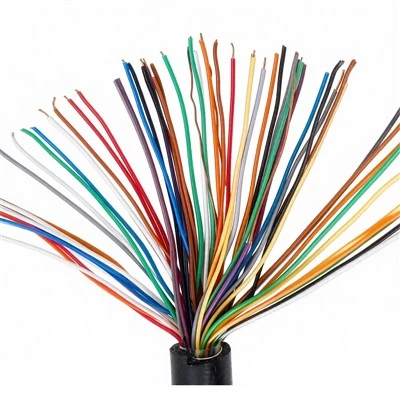
First, let’s get one misconception out of the way early: abrasion resistance isn’t about a single material or a random coating. It’s a system— a combination of the inner core wire, the outer housing, the lubrication inside that housing, and even how the cable is routed once it’s installed. Too often, I see customers spec a stainless steel core and a plastic housing, only to install it where the cable rubs against a sharp metal edge inside a equipment frame, or where it’s constantly being jostled by flying dust and loose gravel. That stainless steel is strong, but if it’s rubbing against a bare steel bracket 10,000 times a day, it will fray right through long before it should. I learned this lesson hard early on in my career. Back in 2013, a customer ordered 500 throttle control cables for a line of light-duty pickup trucks, and they came back within three months with a 40% failure rate. Turns out, their installation team was routing the cables tight against the truck’s frame rails, with no protective sleeve. The steel core was wearing a groove into the plastic housing, and the housing was then cutting into the core wire strands. We redesigned the cable path recommendation, added a small nylon wear guard to the high-friction section, and the failure rate dropped to less than 1% over the next year. That experience taught me: abrasion resistance isn’t just a cable feature— it’s a feature that works with how you install it, and that’s something I spend a lot of time walking my customers through now.
Let’s start with the core of the cable, because that’s the part that does the actual moving. Control cable cores are almost always made of braided wire strands— usually steel, sometimes stainless steel, occasionally copper for specialized low-force applications. The way those strands are braided, and the material they’re made of, has a huge impact on abrasion resistance. A core made of 19 small, tightly packed strands will hold up better to rubbing than a core made of 7 large, loose strands, because the load is distributed across more surface area. Wait, did I just make that right? No, wait— actually, loose strands catch on edges more. If you have a core that’s loosely braided, each strand can move independently, so when it rubs against a surface, it catches and frays, whereas tightly braided strands move as a single unit, so friction is spread evenly without catching. That’s a detail I make sure every engineer I work with knows. Then there’s the material: carbon steel is cheaper, but it’s softer, so it wears down faster in high-abrasion environments. Stainless steel is harder, but not all stainless is the same. 300 series stainless is corrosion-resistant, but it’s actually a bit softer than 400 series, which is more wear-resistant, though less good in salty environments. So if you’re running a cable on a saltwater farm or a municipal snow plow, 300 series is the way to go, but if it’s a dry, dusty construction site, 400 series will give you longer life. We’ve even started offering galvanized steel cores for mid-range applications, because the zinc coating adds a thin extra layer of wear resistance without the price tag of stainless.
Next up is the outer housing, which is often the first line of defense against abrasion. The housing is what the core slides inside, and if the housing wears, the core wears too. Most control cable housings are made of plastic, but not all plastics are created equal. The cheapest housing you’ll find is PVC— it’s flexible, it’s cheap, but it’s soft and wears out fast, especially if it’s rubbing against hard surfaces or exposed to UV light. That’s why you’ll see PVC cables fail in a year or less on equipment that sits outside. The next step up is nylon, which is way harder and more abrasion-resistant than PVC. Nylon can hold up against rubbing on metal edges, it doesn’t degrade from UV as fast, and it’s less likely to crack in cold weather. We use nylon for almost all of our standard heavy-duty cables, because it balances price and performance. But even nylon has its limits. If you’re running a cable through an area where it’s going to be in constant contact with gravel, or being dragged over concrete, we offer reinforced polyurethane (PU) housing. PU is even more abrasion-resistant than nylon— it’s the same material they use for conveyor belts and industrial hoses, so it can take a beating from sharp, rough surfaces. A customer last year was using our PU-housed clutch cables on a fleet of bulldozers, and they told us the cables lasted three times longer than the nylon ones they’d been using. The only downside is that PU is a bit stiffer, so it’s not ideal for tight, complex routes where you need maximum flexibility, but for straight runs or areas with lots of external abrasion, it’s unbeatable.
Then there’s the lubrication, which might seem like a small detail, but it’s huge for abrasion resistance. The core slides back and forth inside the housing, and without lubrication, it’s metal on metal, or metal on plastic, which creates friction, generates heat, and wears both parts out fast. But not all lubricants are right for every application. Dry lubricants, like Teflon powder, are good for low-force applications, or for environments where you don’t want grease getting on parts (like food processing equipment), but they wear out quickly in high-load situations. For heavy-duty cables on construction equipment or trucks, we use a lithium-based grease that’s formulated for high temperatures and high friction. It doesn’t wash out easily if the cable gets exposed to water, and it stays in place even when the cable is being moved thousands of times a day. We also add a small amount of molybdenum disulfide to the grease for applications with extreme abrasion— that’s a solid lubricant that forms a protective layer on the core wire, reducing friction even when the cable is rubbing against the housing. I’ve seen customers skip this part to save a few cents per cable, only to replace entire sets of cables every six months because they’re seizing up and wearing out. The lubrication isn’t a afterthought; it’s part of the abrasion resistance system.
Now, let’s talk about the environmental factors that people rarely consider, but which make a massive difference in how long a cable lasts. Abrasion doesn’t just come from rubbing against hard edges; it comes from dust, dirt, salt, and temperature changes. Let’s start with dust and gravel: if a cable is exposed to airborne particles, those particles can get between the core and the housing, acting like tiny grit that grinds away at both parts over time. That’s why routing a cable through a clean, enclosed space is always better than running it along the side of a loader bucket. We’ve started adding sealed end fittings to our heavy-duty cables, which prevent dirt from getting inside the housing, and that simple change can extend cable life by 30% or more, based on data from our construction customers. Then there’s salt: if you’re working in a region that salts roads in winter, or on coastal equipment, salt can eat away at the core wire, making it weaker and more prone to fraying when it rubs. That’s why we offer stainless steel cores for all our salt-exposed applications, and we also recommend a annual cable inspection to wipe away salt and reapply lubrication. Temperature is another big one: in hot environments, plastic housings can soften, making them more prone to wearing out, while in cold environments, they can become brittle and crack. We test all our cables in temperatures ranging from -40 degrees Fahrenheit to 180 degrees Fahrenheit, to make sure they hold up no matter what the job throws at them.
I mentioned earlier that abrasion resistance is a system, not a single part, and that’s where a lot of customers go wrong. Let’s take an example: a customer needs a control cable for a farm tractor, where it’s going to be routed along the undercarriage, exposed to dust, mud, and occasional rubbing against metal frame parts. If you just buy a cable with a standard carbon steel core, PVC housing, and basic lubrication, it will probably last six months. But if you build the right system: a tightly braided galvanized steel core, a nylon housing with a PU wear strip on the high-rub section, sealed end fittings to keep mud out, and a high-friction lithium grease with molybdenum, that same cable will last three to four years. The cost difference is minimal— maybe 50 cents per cable— but the labor and downtime savings for a farmer is huge, because they don’t have to pull the tractor apart every six months to replace a clutch or throttle cable. That’s why I don’t just sell cables; I work with customers to match the cable system to their specific application, not just the part number. If someone comes to me and says “I need a control cable for X piece of equipment,” I don’t just pull a catalog part. I ask them questions: where is it being installed? How many times a day is it being moved? Is it exposed to dust, salt, or heavy abrasion? What’s the operating temperature? Those answers tell me what kind of core, housing, lubrication, and fittings they need, to make sure the cable doesn’t fail prematurely.
Over the years, I’ve also seen a lot of myths about control cable abrasion resistance, and I want to clear up a couple of the most common ones. First myth: a thicker core is more abrasion-resistant. That’s not true— a thicker core is stronger, but if it’s made of soft material, like cheap carbon steel, it will wear faster than a thinner core made of hard stainless steel. And a thicker core is stiffer, which can actually make it more prone to catching on edges when you’re routing it, leading to more abrasion during installation. Second myth: coating a cable with Teflon makes it unkillable. Teflon coatings reduce friction, but they wear off over time, especially if the cable is rubbing against hard surfaces. Once the Teflon is gone, you’re left with the bare wire, which will start wearing right away. The third myth: all stainless steel is the same for abrasion resistance. As I mentioned earlier, 300 series is corrosion-resistant, but 400 series is harder and more wear-resistant, so it’s better for high-abrasion applications, even if it’s not quite as good in saltwater. Matching the right material to the environment is always better than assuming a single material works for everything.
Now, let’s talk about how we test the abrasion resistance of our control cables, because this isn’t just guesswork. We have a testing lab at our warehouse that simulates real-world use, to make sure our cables meet (and often exceed) industry standards. The standard test for control cable abrasion is called the Taber Abrasion Test, where we run the core back and forth inside the housing thousands of times, while applying a constant force, and measure how much the core and housing wear before they fail. But we don’t stop there. We also test in specific environments: for our agricultural cables, we run them in a dust chamber filled with fine silica sand, to simulate the constant abrasion from field dust. For our marine and salt-exposed cables, we submerge them in salt water for 100 hours, then run them through the Taber test, to see how corrosion affects abrasion resistance. For our cold-weather cables, we test them at -40 degrees Fahrenheit, to make sure the housing doesn’t crack or the core doesn’t seize up when it’s cold. Every batch of cables we ship goes through at least one of these tests, so our customers can be confident that when they install our cables, they’re not going to fail because of abrasion.
I think the biggest mistake I see in the control cable industry is that customers prioritize upfront cost over long-term performance. A $5 control cable might seem like a better deal than a $7 control cable, but if the $5 one fails twice as often, the total cost over two years is actually higher. That’s why we’re always transparent with our customers about what makes a cable abrasion-resistant, and why it’s worth paying a little more for the right parts. When you’re running a construction crew, downtime costs money— a single hour of a bulldozer sitting idle can cost hundreds of dollars. So replacing a control cable that lasts five years, instead of two, saves you thousands of dollars in downtime and labor, not to mention the frustration of dealing with unexpected equipment failures on a job site.
At the end of the day, control cables are a small part, but they play a huge role in the performance of any equipment. Abrasion resistance isn’t a fancy feature; it’s what ensures your throttle works when you need it, your clutch engages when you push the lever, and your crane winch moves safely and reliably. If you’re a fleet manager, equipment manufacturer, or repair shop owner looking for control cables that hold up to real-world abrasion, I’m here to help. I’ve been in this business long enough to know what works, and what doesn’t, and I can work with you to find the right cable system for your specific application. Whether you need a small throttle cable for a lawn mower or heavy-duty cables for a construction crane, we’ve got you covered. Don’t wait for a cable failure to cost you time and money— reach out, and let’s talk about how we can make sure your control cables stand up to the abrasion they face every day.
Compensating Cables References
- Control Cables: Design, Application, and Maintenance. Society of Automotive Engineers, 2018.
- Abrasion Resistance of Polymer and Metal Components for Mobile Equipment. National Institute for Occupational Safety and Health, 2020.
- Agricultural Equipment Control System Standards. American Society of Agricultural and Biological Engineers, 2019.
- Corrosion and Wear Resistance in Marine Control Cables. International Association of Classification Societies, 2021.
Anhui Yuantong Cable Co., Ltd.
As one of the most professional control cables manufacturers and suppliers in China, we offer a wide range of cables with superior quality. Please feel free to wholesale bulk customized control cables from our factory. Also, pricelist is available.
Address: Yongfeng Industrial Park, Tianchang City, Anhui Province
E-mail: ahytcable@126.com
WebSite: https://www.yuantongcable.net/
