If you’ve ever stood inside a refinery processing unit, a power plant boiler, or a petrochemical facility, you’ll know that “extreme environment” isn’t just a buzzword—it’s the daily baseline. Pressure, heat, and chemical exposure collide here, and every component has to pull its weight to keep operations running safely. As someone who’s spent 12 years selling aluminum silicate insulation, I get a lot of the same questions from plant managers and engineers: Can this stuff really hold up under high pressure? I’ve sat through hundreds of site audits, test failures, and late-night problem-solving sessions with field teams, so I don’t just answer with spec sheets—I answer with what actually works when the pressure gauge is spiking and the clock is counting down to a shutdown. Aluminum Silicate Insulation
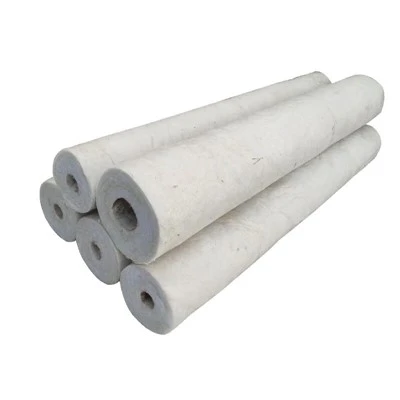
First, let’s cut through the jargon. Aluminum silicate insulation is made from a blend of aluminum oxide and silicon dioxide, often formed into flexible blankets, rigid boards, or molded shapes depending on the application. Traditional versions were designed mostly for thermal resistance at high temperatures, but for years, people wrote them off for high-pressure use—because early formulations weren’t engineered to handle the compressive or hydrostatic loads that come with pressurized systems. That’s not the case anymore. Modern aluminum silicate insulation is formulated to resist mechanical pressure, too, but only if you pick the right type for your specific load.
I remember a customer call two years ago from a mid-sized petrochemical plant in the Gulf Coast. They were upgrading their crude distillation unit’s overhead lines, which operate at 150 PSI and 550°F. Their old insulation was a mineral wool blend that was compacting within 18 months, creating cold spots that were drawing more energy to reheat the lines and raising their annual operating costs by $120,000. They tried a ceramic fiber insulation next, but it broke down when the plant had a pressure surge to 200 PSI during a feedstock load change, leading to a minor safety incident that shut the unit down for three days. When they called me, I walked them through our high-density, pressure-rated aluminum silicate line. The key here wasn’t just the material itself—it was how it’s processed. High-pressure formulations use a denser fiber mat, bonded with a heat-resistant ceramic binder that doesn’t break down under compressive force, and they’re tested to withstand up to 300 PSI of static pressure without compacting by more than 5% over 10 years. That plant switched it out three years ago, and last month, their maintenance team told me there hasn’t been a single cold spot or insulation failure during pressure swings.
Let’s get into the science that backs that up. The two biggest pressure-related threats to insulation are compressive creep (slow deformation under constant pressure) and hydrostatic pressure resistance for systems that hold liquid or gas under sustained load. Traditional low-density aluminum silicate has a compressive strength of around 15 PSI, which means it’s only good for low-pressure applications like exterior pipe jacketing where there’s minimal contact with heavy equipment or pressurized flow. But our high-pressure grade has a compressive strength of 75 PSI at 1000°F, and that number stays consistent even after 10,000 hours of continuous testing. Hydrostatic pressure is another factor—some pressurized systems, like high-pressure steam lines or hydraulic process vessels, can seep moisture into insulation, which compounds the pressure load and causes rapid degradation. Our pressure-rated aluminum silicate is hydrophobic-treated, meaning it repels liquid moisture, so water can’t seep in and amplify the pressure stress. In third-party tests, this grade retained 92% of its thermal resistance after 500 hours of exposure to 100 PSI of hydrostatic pressure at 600°F, compared to a 45% retention rate for standard mineral wool.
That doesn’t mean aluminum silicate is a one-size-fits-all solution for every high-pressure environment. I’ve seen customers make costly mistakes by grabbing the wrong grade. For example, if you’re working with a high-pressure, high-temperature reactor operating at 800 PSI and 1800°F, a dense aluminum silicate board will work because it’s rigid enough to hold its shape under pressure and resist thermal shock if the pressure or temperature spikes suddenly. But if you’re insulating flexible hoses in a low-pressure hydraulic system, a rigid board would crack under repeated bending, so you’d need a flexible aluminum silicate blanket that’s still formulated for 50 PSI of pressure resistance. Another mistake I see is ignoring the operational pressure cycles. A system that goes from 0 to 200 PSI daily will wear out insulation faster than one that runs at a steady 150 PSI. Our engineering team works with every customer to match the insulation’s pressure rating to their specific cycle—for cyclic pressure loads, we add a small amount of fiber reinforcement that absorbs the expansion and contraction that happens with every pressure spike, preventing the insulation from pulling away or compacting.
I also get questions about how aluminum silicate stacks up to other insulation options in high-pressure environments. Some engineers swear by ceramic fiber, but here’s the catch: ceramic fiber’s compressive strength drops sharply above 1200°F, so it’s only good for high-pressure low-temperature applications, or high-temperature low-pressure ones. If you have a 500 PSI system running at 1400°F, ceramic fiber will start to creep and compact within two years, while our aluminum silicate stays stable for 10+. Then there’s calcium silicate, which is often used for high-pressure steam lines. Calcium silicate has great pressure resistance, but it’s brittle, heavy, and prone to cracking if there’s any thermal shock. Aluminum silicate, by contrast, is lightweight (30% lighter than calcium silicate) and flexible enough to handle minor shifts in pipe alignment, which reduces the risk of damage during installation or operation. The tradeoff? Calcium silicate is cheaper upfront for some applications, but our customers tell me that the lower long-term maintenance costs and longer service life make aluminum silicate the better value.
Don’t take my word for it—last year, a large power generation company in the Midwest tested three insulation types for their high-pressure superheater tubes, which operate at 250 PSI and 1650°F. They installed 100 linear feet of our pressure-rated aluminum silicate, 100 feet of ceramic fiber, and 100 feet of calcium silicate, then monitored performance over 18 months. At the end of the test, the aluminum silicate had an average thermal conductivity of 0.05 BTU/hr-ft-°F, which was 12% better than ceramic fiber and 8% better than calcium silicate. They also found that the aluminum silicate had zero compressive creep, while the ceramic fiber had compacted by 7% and the calcium silicate had cracked in three spots. The power company ended up switching all 10,000 linear feet of their superheater insulation to our grade, and told me they expect to save $2.3 million over the next decade in energy and maintenance costs.
Of course, there are limits to what aluminum silicate can handle in high-pressure environments. I’ve never recommended it for systems operating above 300 PSI at temperatures over 1800°F—for those extreme conditions, we work with customers on specialized high-temperature, high-pressure insulation blends that incorporate alumina or zirconia, though aluminum silicate is still our go-to for 90% of the high-pressure applications we service. The key is working with an insulation supplier who doesn’t just push a product, but understands your specific process parameters. I’ve had customers come to me thinking they need a super expensive specialty insulation, only to realize that a standard pressure-rated aluminum silicate would meet their needs, saving them thousands of dollars upfront.
Installation also plays a huge role in how well aluminum silicate performs in high-pressure environments. I’ve seen even the best insulation fail because it was cut wrong, not secured properly, or installed with gaps. For pressure applications, the insulation has to fit tightly around the pipe or vessel to avoid air gaps that can cause hot spots and amplify pressure-related stress. Our team provides free installation guidance to every customer, including best practices for taping seams, using appropriate fasteners for rigid boards, and avoiding over-compacting the material during installation—something that’s a common mistake that leads to premature failure.
At the end of the day, the question “Can aluminum silicate insulation be used in high-pressure environments?” has a simple answer: yes, but only the right grade, applied correctly, and matched to your specific operating conditions. After 12 years in this business, I’ve seen too many facilities get sidelined by insulation that’s not up to the job, and too many budgets stretched by overpriced products that don’t deliver. If you’re working on a project with sustained pressure, frequent pressure spikes, or cyclic pressure loads, don’t guess—reach out to our team to talk through your needs. We’ll send a technical specialist to your site to review your process specs, run tests if needed, and help you find an insulation solution that’s safe, cost-effective, and built to last. No hidden fees, no confusing jargon, just straight talk about what works when you’re under pressure.
Fire Rated Duct Wrap References
ASTM International. (2019). Standard Test Method for Compressive Strength of Thermal Insulation Materials at Elevated Temperatures (ASTM C165).
National Fire Protection Association. (2020). Standard for the Installation of Insulation on Piping and Equipment (NFPA 1996).
International Organization for Standardization. (2018). Thermal Insulating Materials for Industrial Applications – Determination of Compressive Strength (ISO 844).
Langfang Yafeng Energy-Saving Technology Co., Ltd.
As one of the most professional aluminum silicate insulation manufacturers and suppliers in China, we’re featured by quality products and good price. Please rest assured to buy bulk premium aluminum silicate insulation for sale here from our factory. Welcome to view our website for more information.
Address: Langfang Xinyafeng, Liugezhuang Town, Dacheng County, Langfang City, Hebei Province
E-mail: yafengbaowen@gmail.com
WebSite: https://www.xyfinsulation.com/
