Hey there, folks! As a supplier of trunnion mounted ball valves, I often get asked about the pressure drop across these valves. So, I thought I’d take a few minutes to break it down for you. Trunnion Mounted Ball Valves
First things first, let’s talk about what pressure drop actually is. Pressure drop is the difference in pressure between the inlet and the outlet of a valve. In simpler terms, it’s the amount of pressure that’s lost as fluid flows through the valve. It’s an important factor to consider because it can affect the efficiency of your system, and it can also impact the performance and lifespan of your valve.
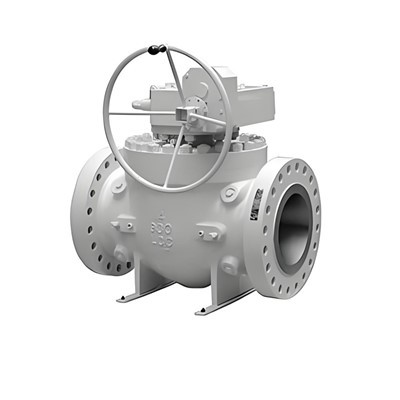
Now, let’s dive into the nitty – gritty of pressure drop across trunnion mounted ball valves. Trunnion mounted ball valves are a popular choice in many industries, like oil and gas, chemical processing, and power generation. They’re known for their durability, reliability, and ability to handle high – pressure and high – temperature applications.
The pressure drop across a trunnion mounted ball valve depends on several factors. One of the main factors is the valve’s design. Trunnion mounted ball valves typically have a full – bore or reduced – bore design. A full – bore valve has an opening that’s the same size as the pipeline, which means there’s less restriction to the flow of fluid. As a result, the pressure drop across a full – bore trunnion mounted ball valve is usually lower compared to a reduced – bore valve.
A reduced – bore valve, on the other hand, has a smaller opening than the pipeline. This creates more resistance to the flow of fluid, leading to a higher pressure drop. But reduced – bore valves are often more compact and less expensive, so they might be a better choice if space and cost are major concerns.
Another factor that affects the pressure drop is the valve’s ball size and the seat design. A larger ball size generally allows for a smoother flow of fluid, which can reduce the pressure drop. The seat design also plays a crucial role. A well – designed seat will provide a good seal while minimizing the resistance to the fluid flow. For example, some modern trunnion mounted ball valves use advanced seat materials and designs that can significantly reduce pressure drop.
The flow rate of the fluid is also a key factor. As the flow rate increases, the pressure drop across the valve also increases. This is because at higher flow rates, the fluid experiences more friction and turbulence as it passes through the valve. So, if you have a high – flow application, you need to pay extra attention to the pressure drop to ensure that your system operates efficiently.
The viscosity of the fluid is another consideration. Viscous fluids, like heavy oils, create more resistance as they flow through the valve, resulting in a higher pressure drop compared to less viscous fluids, like water.
Now, you might be wondering how to calculate the pressure drop across a trunnion mounted ball valve. Well, there are several methods and equations available. One common way is to use the valve’s flow coefficient, also known as Cv. The Cv value is a measure of the valve’s capacity to pass fluid. You can use the Cv value along with the flow rate and the specific gravity of the fluid to calculate the pressure drop.
There are also some online calculators and software tools that can help you estimate the pressure drop. But keep in mind that these calculations are just estimates, and the actual pressure drop can vary depending on the real – world conditions, like the condition of the valve, the quality of the installation, and the characteristics of the fluid.
Why is it so important to understand the pressure drop across trunnion mounted ball valves? Well, a high pressure drop can have several negative impacts on your system. Firstly, it can increase the energy consumption of your pumps or compressors. Since they have to work harder to overcome the pressure drop, it means more electricity or fuel is being used, which translates to higher operating costs.
Secondly, a high pressure drop can cause cavitation in the valve. Cavitation occurs when the pressure of the fluid drops below its vapor pressure, causing bubbles to form. When these bubbles collapse, they can damage the valve’s internal components, leading to leaks and reduced valve lifespan.
On the other hand, if you can keep the pressure drop to a minimum, you can improve the overall efficiency of your system. This means lower energy costs, better performance, and longer – lasting equipment.
As a trunnion mounted ball valve supplier, I can offer you a wide range of valves with different designs and features to help you manage pressure drop. We can work with you to select the right valve for your specific application, taking into account factors like flow rate, fluid viscosity, and pressure requirements.
If you’re in the market for trunnion mounted ball valves and want to learn more about how to minimize pressure drop in your system, don’t hesitate to reach out. We have a team of experts who can provide you with all the information you need and help you make an informed decision. Whether you’re building a new system or upgrading an existing one, we’re here to support you every step of the way.
So, if you’re interested in discussing your trunnion mounted ball valve needs and how we can help you optimize your system’s performance by managing pressure drop, just get in touch. We’re eager to have a chat with you and see how we can work together to meet your goals.
Actuator References:
- "Valve Handbook" by Crane Co.
- "Fluid Mechanics and Thermodynamics of Turbomachinery" by S. L. Dixon.
- Industry whitepapers on trunnion mounted ball valves and fluid flow.
Wuxi PYNOS Flow-tech Co., Ltd.
As one of the leading trunnion mounted ball valves manufacturers and suppliers in China, we offer a wide range of products with superior quality. We warmly welcome you to buy high quality trunnion mounted ball valves made in China here from our factory. We also accept customized orders.
Address: Sales Center: 7th Floor, No.19 Qingyuan RD, Wuxi City, Jiangsu Prov., China
E-mail: Info@pynosvalve.com
WebSite: https://www.pynosvalves.com/
