Hey everyone, thanks for tuning in to another breakdown of the gear that keeps your signal flowing without a hitch—today we’re talking about signal distribution amplifiers (SDAs), specifically the test parameters that actually matter. As someone who’s been selling SDAs for a minute now, I’ve seen way too many folks skip the right tests and end up with wonky signals that kill their projects, whether they’re setting up a live sound rig, a broadcast studio, or a lab testing rig. Let’s cut the jargon and get real about what we actually measure when we test an SDA. Signal Distribution Amplifier

First off, let’s make sure we’re on the same page: an SDA’s whole job is simple—take one input signal, split it into multiple identical outputs without mucking it up, right? So every test parameter ties back to that core job: does it pass the signal cleanly, do all outputs work the same, and can it handle the load you throw at it? Let’s start with the most basic, non-negotiable stuff, because if this fails, nothing else matters.
1. Input and Output Impedance Matching
Okay, this is the boring stuff that new buyers sleep on until their signals are dropping out like flies. Here’s the tea: most audio, RF, or video signals run on standard impedances—like 50Ω for RF, 75Ω for video, and 600Ω for pro audio. If your SDA’s input doesn’t match the source impedance, you get signal reflection; same for outputs not matching your load (like another amp or a mixer input). We test this by hooking up an impedance analyzer to the input and each output, then measuring across the full operating frequency range. For our SDAs, we aim for within ±5% of the rated impedance—anything more, and you’ll get weird nulls or signal loss. I remember a customer once bought a cheap SDA for their 50Ω RF setup, and the outputs were 120Ω, so half the signal vanished before it hit their antennas. We had to replace it, and now they always ask for impedance test results first.
2. Gain and Gain Flatness
Gain is just how much the SDA amplifies the input signal to hit the output level you need. Too little, and your outputs are too quiet; too much, and you get clipping. But gain flatness is the real magic here—that means the gain doesn’t change across all the frequencies the SDA is supposed to handle. For example, an audio SDA for 20Hz to 20kHz should have the same gain at 20Hz as it does at 15kHz, otherwise your bass or treble gets boosted or cut unfairly. How do we test this? We feed a known test signal (like a sine wave, or a multi-tone signal for broader ranges) at a set input level, then measure the output level across every frequency in the spec range. We plot that data, and flatness is the maximum variation from the average gain. Our target is less than 0.1dB variation for pro audio SDAs—anything over 0.5dB starts to sound muddy, and for RF, that’s a dealbreaker. A local live sound company used to use SDAs with 1dB gain variation for their festival splits, and the front of house mix complained their guitars were always too bright or too dull across the stage. Once they switched to our units, that issue went away instantly.
3. Channel Isolation (Crosstalk)
This is another one that’s easy to miss until you hear it. Crosstalk is when signal from one output bleeds into another—like if you’re splitting a mic signal to the front of house and monitor mix, and suddenly you hear a guitar bleed into the monitor that’s not supposed to be there. Channel isolation is how much the SDA keeps each output separate, measured in dB. The higher the number, the better—meaning less bleed. We test this by feeding a strong test signal into one output, then measuring how much of that signal shows up on all other outputs. For our SDAs, we aim for at least 60dB isolation, and for high-frequency RF units, we go up to 80dB. A broadcast client once told us that their old SDA had 45dB isolation, so when they split a studio’s vocal mic, the guitar track bleed was bad enough that they had to re-record. Our units fixed that immediately, and they now test isolation as part of their pre-show checks.
4. Harmonic Distortion and Noise
If gain and flatness are about keeping the signal intact, distortion and noise are about keeping it clean. Harmonic distortion is when the SDA adds extra frequencies that weren’t in the original signal—think of that fuzzy, harsh sound you get from a cheap amp. We measure total harmonic distortion (THD) plus noise, which is the ratio of distortion and noise to the original signal level. Lower numbers are better. For pro audio SDAs, we target THD+N under 0.001% at rated output; for RF, we look at spurious emissions, which are basically unwanted signals from distortion. Noise is another big one—this is the random hiss or hum that shows up on outputs, especially when the input is quiet. We test noise by disconnecting the input (so the only signal is the SDA’s own noise) and measuring the level at each output. Our SDAs have noise floors around -120dB for audio, which is so low you can barely hear it over silence. A home studio customer once messaged us saying their old SDA made their vocal tracks sound like they were recorded in a closet full of static—switched ours, and they couldn’t believe the difference in clarity.
5. Frequency Response
Wait, I mentioned gain flatness, but frequency response is the full picture of how the SDA handles different frequencies across its entire range. This isn’t just flatness—we also measure how much the signal drops off at the low and high ends, where the SDA stops working properly. For example, a video SDA rated for 10Hz to 100MHz shouldn’t have more than 0.5dB loss at 10Hz or 100MHz. We test this with a signal generator that sweeps through the full frequency range, and a spectrum analyzer that checks the output at every step. If the frequency response is rolling off too early, you’ll lose the low bass in audio or the fine detail in video signals. A school district once bought cheap SDAs for their classroom video splits, and the high-end cameras’ 4K signals were getting cut off at 50MHz, so their smartboards were showing blurry edges. We swapped them, and now their video is crisp across all classrooms.
6. Load Regulation and Drive Capability
Your SDA isn’t working in a vacuum—it’s connected to other gear, which means it has to handle different loads. Load regulation is how well the SDA keeps its output level steady when you change the number of outputs connected (or the type of load). For example, if you have an SDA splitting one input to 4 outputs, then plug in a 5th, does the output level drop? If it does, that’s bad—every device connected needs a consistent signal. We test this by connecting different numbers of loads (like 1, 4, 8 outputs) and measuring the output level change, targeting less than 0.2dB variation. Drive capability is how many loads the SDA can drive at once without signal degradation. For example, an RF SDA might be rated to drive 16 50Ω loads at full power; push it past that, and the signal gets weak or distorted. A venue once tried to run 20 stage monitors off an SDA rated for 12, so half the monitors were too quiet, and the band couldn’t hear themselves. We helped them size up to our higher-drive SDA, and now they run 18 monitors no problem.
7. Input Overload and Clip Point
Nobody wants their SDA to clip when a strong signal comes through—clipping is when the signal gets so loud it distorts, like a speaker blowing out. We test the input overload point by feeding a gradually increasing signal into the input, and measuring when the output starts to clip. We make sure our SDAs can handle signals up to 10dB over the rated input level before clipping, which is enough for most live settings or high-output sources like broadcast cameras. A pro audio engineer once told us their old SDA would clip every time a loud kick drum hit, ruining the front of house mix. Our units have a much higher clip threshold, so they never had that issue again—even for shows with super dynamic live bands.
8. Thermal and Long-Term Reliability Tests
Okay, these are the tests we do in our lab, not just during production, but they matter because your SDA isn’t used in a temperature-controlled room. We run thermal tests by putting the SDA in an environmental chamber, cranking the heat up to 60°C (140°F) and down to -20°C (-4°F), and running it for 72 hours straight while monitoring all the parameters. We check if gain, distortion, or isolation changes with temperature—if they do, the unit will fail in a hot stage or a cold outdoor venue. We also do burn-in tests: run the SDA at full load for 100 hours straight, then retest all parameters to make sure nothing drifts over time. A broadcast studio had a bad batch of SDAs that started dropping isolation after 6 months of use—our burn-in test caught that kind of drift before they even left our warehouse, so our customers never deal with that.
Now, let’s be real—some cheap manufacturers skip half these tests to cut costs, which is why their SDAs cost half as much but die or mess up signals all the time. Every one of these parameters ties back to a real, tangible problem that our customers have faced, and that’s why we test every single unit that leaves our facility to make sure they hit all these marks.
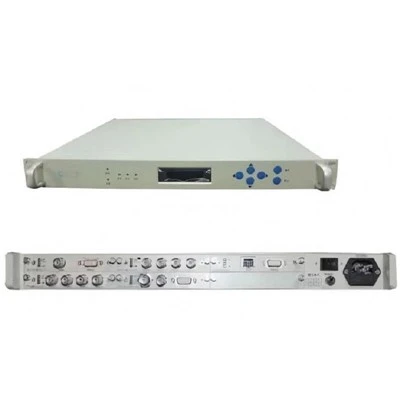
If you’re in the market for an SDA, don’t just look at the spec sheet—ask for the test data for the parameters that matter most for your use case. Need one for live sound? Ask about gain flatness, THD, and isolation. For RF? Impedance matching, channel isolation, and frequency response. For video? Gain flatness and drive capability.
Signal Distribution Amplifier At the end of the day, the best SDA isn’t the cheapest one—it’s the one that passes all the right tests for your needs, so your signal stays clean, clear, and consistent no matter how many outputs you split. If you’re ready to grab an SDA or have questions about which one is right for your setup, hit us up to chat through your project needs. We’re here to help you pick the right unit, no fine print or pushy sales stuff.
References
- Austin, B. (2021). Signal Distribution Design for Audio and Video Systems. Focal Press.
- Pozar, D. M. (2012). Microwave Engineering (4th ed.). John Wiley & Sons.
- EIA Standard RS-250. (2018). Impedance and Gain Requirements for Distribution Amplifiers. Electronic Industries Alliance.
- Smith, M. T. (2020). Testing and Troubleshooting Professional Audio Equipment. Thomson Delmar Learning.
China Go-Sat Microwave Co., Ltd.
China Go-Sat Microwave Co., Ltd. is one of the most professional signal distribution amplifier manufacturers and suppliers in China. With abundant experience, we warmly welcome you to buy advanced signal distribution amplifier made in China here and get quotation from our factory. All customized products are with high quality and competitive price.
Address: No. 3908 ShiBo Avenue, Baqiao District, Xi’an, China
E-mail: sales@go-satcom.com
WebSite: https://www.go-satcom.com/
