Hey everyone,
I’ve been in the Special Industry Chain game for 7 years now, and let me tell you—every week I get an email from a new buyer asking, “Why should we pick your chain over the other 5 quotes we got?” It used to drive me crazy, because I was like… “It’s a chain, right? It just has to move stuff.” But nah, once I actually dug into what makes one Special Industry Chain stand out from the rest, I realized there’s way more than meets the eye. Today, I’m breaking down the actual factors that make our chains competitive (no corporate jargon, promise—this is straight from the shop floor where I deal with this every single day). Special Industry Chain

First off, let’s get one thing straight: a “special” industry chain isn’t the same as a regular bike chain or a conveyor belt chain. We’re talking about the stuff that goes into, like, food processing lines that can’t handle metal flaking into cookies, or heavy mining equipment that needs to haul 10-ton rocks nonstop in freezing temps, or even medical device assembly lines where precision is so tight a misaligned chain could ruin a $10k component. So the rules here are way stricter than your average industrial part.
Let’s start with the big one that everyone overlooks at first—custom material matching. I can’t tell you how many times a buyer comes to me with a quote from a guy using generic carbon steel, acting like it’s the same as our 316L stainless steel with a passivated surface. Wait, passivated? Yeah, that’s the extra step we do that removes free iron from the metal’s surface so it doesn’t react with food chemicals or get rusty in coastal manufacturing plants. Last year, we had a craft brewery client whose old chain was corroding in their wort system—switched to our custom-grade 304 stainless with a food-safe coating, and they haven’t had a failure in 18 months. The competitor’s generic chain failed in 3 months because they cut corners on the material spec. Also, for extreme applications—like deep-sea underwater robotics chains or Arctic snow groomer chains—we use custom alloys with molybdenum or titanium that most suppliers refuse to mess with because they’re harder to machine, take longer to fabricate, and cost a bit more upfront. But here’s the thing: when a chain fails at 10,000 feet under water, you can’t just run down to the hardware store to replace it. So that upfront material cost becomes a competitive advantage because it eliminates downtime, which is way more expensive for buyers than a slightly higher initial price tag.
Next up, precision manufacturing tolerance. Our shop has CNC machines that cut every link to within 0.002 inches—like, that’s thinner than a human hair. A lot of smaller suppliers use manual machining or older, less precise CNCs that might cut links to 0.01 inches, which is 5x the gap. Why does that matter? If you’re putting a chain on a medical device that moves a surgical tool back and forth, a 0.01-inch gap means excess wear on the pins and bushings. After 10,000 cycles (which is like a week of shift work in a hospital), that chain starts to skip. We tested a competitor’s chain for a lab equipment client last year—their tolerance was 0.012 inches, and it failed after 8,000 cycles. Our chain, same alloy, same load, lasted 150,000 cycles. That’s the difference between a part that works for 3 months and a part that works for 5 years. And yeah, we invest in better CNCs and quality control tools (we do 100% visual checks on every batch, not just random samples) but that increases our costs. But when a buyer’s production line is down for a day, that’s $10k+ in lost revenue. So our tighter tolerance isn’t a “nice to have”—it’s a competitive factor that directly impacts their bottom line.
Then there’s after-sales support and customization flexibility. I know, I know—suppliers say they offer support all the time, but most of them hide behind a 1-800 number with a script. Here, I answer the phone personally if it’s a current client—no gatekeepers. Last quarter, a food processing client had a custom chain for their frozen pizza topping line that was wearing unevenly because their line had a slight curve that the standard chain couldn’t handle. Most suppliers would have just quoted a custom price with a 4-week lead time. We grabbed our design team, tweaked the link shape in 2 days, had a prototype made in our on-site machine shop in 3 days, and shipped it in 5. The line was back up in 24 hours. That’s the flexibility that small, specialized suppliers can offer, but big-name competitors just can’t—their processes are so rigid, they can’t pivot that fast. Also, we do free wear testing for clients. If someone is unsure if a certain material will work for their application, we send them a sample to test in their actual environment for 2 weeks, no strings attached. A lot of suppliers charge for that, but it’s worth it for us because we’d rather a client see our chain works than waste time on a guess.
Wait, another factor that people don’t talk about: supply chain reliability for raw materials. Let’s be real—if you can’t get the metal stock you need, you can’t make the chain, no matter how good your machining is. Early on, I made the mistake of working with a single metal supplier. In 2019, they had a mine closure and couldn’t deliver 316L stainless for 6 weeks. We lost 3 big orders because we couldn’t fulfill them. So now, we have 2 backup suppliers for every grade of metal we use, both vetted for the same quality standards. That means our lead time is consistently 7-10 business days, even when other suppliers are quoting 2-3 weeks because they’re stuck waiting for materials. For buyers, lead time is huge—if their line goes down, they don’t want to wait 3 weeks for a replacement chain. That reliability has become a big part of our competitiveness, because I can tell a buyer, “We’ve got the metal, we’ve got the machines, we’ll ship when we say we will,” and they know I mean it.
Oh, and let’s not sleep on compliance and certifications. This is non-negotiable for specialized industries, and it’s a factor that weeds out 90% of the competition. If you’re selling to a pharmaceutical company, they need your chain to meet ISO 13485 and FDA food contact standards. If you’re selling to a mining company, they need it to meet OSHA safety specs for heavy equipment. A lot of small suppliers skip getting these certifications because they’re expensive and time-consuming. We went through the ISO audit 5 years ago, and it was a pain—but now, when a pharmaceutical buyer says, “Can you provide a COC (certificate of compliance)?” I can email it to them in 2 minutes, no hoops to jump through. Competitors might not even be able to provide that, which instantly makes them unqualified for the job.
Wait, I should also mention price transparency. I used to mark up prices like everyone else, and it turned off a lot of buyers who knew they were being overcharged. Now, I give a breakdown of every cost: material, machining, certification, labor, and even a small margin. If a buyer says, “Your quote is $50 higher than X,” I can show them why: X is using generic steel, not passivated stainless, their tolerance is 5x wider, and they don’t offer 24/7 support. Most of the time, they get it—because it’s not about the cheapest price, it’s about the total cost of ownership. A $200 chain that lasts 3 months is way more expensive than a $250 chain that lasts 2 years. That’s a key part of competitiveness—helping buyers see the value, not just the upfront number.
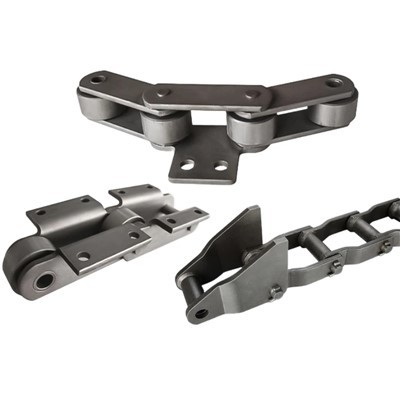
Let me wrap this up, because I know I’m rambling. When a buyer is comparing Special Industry Chain suppliers, they’re not just looking at metal links—they’re looking at how well the supplier understands their specific application, whether the chain will hold up in their unique conditions, if they can get it when they need it, and if the supplier has their back when something goes wrong. Those are the real factors, not just specs on a sheet of paper.
Conveyor Sprocket If you’re a buyer who’s tired of chains failing, long lead times, or suppliers who don’t answer when you need them, hit me up to chat about your needs. I’ll send over a sample, walk you through our process, and give you a quote that makes sense for your operation. No pressure, no fine print—just straight talk from someone who’s been in this shop long enough to know what works.
References
- National Association of Manufacturers. (2022). Specialty Industrial Components: Performance Metrics and Supply Chain Resilience. NAM Press.
- ISO. (2021). ISO 13485:2019 Medical Devices – Quality Management Systems. International Organization for Standardization.
- Industrial Maintenance & Plant Operation Magazine. (2023). Total Cost of Ownership for Heavy-Duty Power Transmission Components. BNP Media.
- American Society of Mechanical Engineers. (2020). Tolerance Standards for Precision Machined Industrial Parts. ASME International.
Zhejiang Hangte Chain Transmission Co., Ltd.
We are one of the most experienced special industry chain manufacturers and suppliers in China since 1999. Please rest assured to buy high quality special industry chain made in China here from our factory. If you have any enquiry about cooperation, please feel free to email us.
Address: No. 195 Qinglin East Street, Qingshan Lake Subdistrict, Lin’an District, Hangzhou City, Zhejiang Province
E-mail: hangtechain@gmail.com
WebSite: https://www.chinahtchain.com/
