Hey guys, let’s cut to the chase—if you’re here, chances are you’ve heard of a TG4 Seal and you’re either trying to confirm one you just got, or you’re looking for a reliable supplier to get real ones from. I’ve been working with TG4 Seals for over 8 years now, first as a warehouse tech, and now as a supplier that’s all about making sure my clients don’t fall for fakes. Let me walk you through what actually matters when verifying a TG4 Seal—no fancy jargon, just what I’ve learned from fixing mistakes and keeping my customers happy. TG4 Seal

First off, let’s get the basics straight: a TG4 Seal isn’t your average plastic seal. It’s used for high-security stuff—shipping containers, cargo trucks, rail cars, even some industrial equipment. Fakes are a big problem here because a bad seal can lead to cargo theft, tampering, or even legal headaches if your shipment doesn’t meet global security rules. I’ve seen it happen: a new client bought what they thought was a real TG4 Seal from a sketchy online seller, and it broke open mid-transit. They lost $20k in electronics, and the insurance wouldn’t cover it ‘cause the seal wasn’t certified. That’s why verifying is non-negotiable.
Now, let’s break down the steps, starting with the easy, on-the-spot checks you can do right when the seal arrives. Most people skip these, but they’re the first line of defense.
-
Check the Physical Markings Up Close
Real TG4 Seals have super specific details, not just a “TG4” stamp. Let’s start with the lettering: on a fake, it’s usually blurry, the letters might be uneven, or the numbering has random gaps. Real ones use die-stamped or laser-etched text that’s crisp—no fuzzy edges. The “TG4” logo itself: look at the “G” in the middle. On a real seal, the horizontal bar through the G is perfectly centered, and the lines of the logo are uniform thickness. Fakes often have lopsided Gs or the bar is off-center.
Also, every legitimate TG4 Seal has a unique serial number. Not just a random number—make sure it’s 12 digits long, right? Wait, no, hold on—let me confirm: it’s 12 alphanumeric characters, all sequential or in a consistent series, no repeated numbers across seals from a valid batch. Fakes might have 10 digits, or duplicate serial numbers, or even letters that are easy to copy, like “O” instead of “0” (zero) which is a common trick. Oh, and the serial number should be printed on both the lock body and the locking bar—if it’s only on one, that’s a red flag. -
The Tamper Indicator Test
Here’s a thing fakes almost never get right: the tamper-evident feature. Real TG4 Seals have a tiny, built-in indicator—usually a plastic tab that’s only visible when the seal is locked. If someone tries to pry the seal open, that tab breaks off or turns color (most turn from blue to red when tampered with). To test this, gently wiggle the locking bar once it’s secured. If the tab stays intact, great. If it moves or you see a color change, that’s a fake. I’ve had a client bring me a fake seal once where the tamper tab was just a sticker—peeled it off easily. Don’t buy that.
Another test: pull the seal tight as if it’s on a container. Real TG4 Seals have a locking mechanism that won’t budge—no give, no sliding. Fakes often have flimsy locks that you can loosen with a flathead screwdriver in 10 seconds. I always tell my customers: if you can unlock it without the special tool, it’s not a real TG4 Seal. -
Verify with the Official TG4 Database
This is the big one, and the part most people mess up. A lot of suppliers will tell you “it’s certified,” but you need to actually confirm it. Every real TG4 Seal has its serial number logged in the official TG4 global database. Here’s how to do it right—don’t just type the number into Google; go to the official TG4 website’s verification portal (I can’t link it here, but it’s easy to find with a quick search). Enter the full 12 alphanumeric serial number, and it should pull up details: the supplier’s name, the batch number, the manufacture date, and the type of seal (like steel cable, plastic, etc.).
If the serial number doesn’t come up, or it shows a wrong supplier, that’s a fake. I remember a client who bought a batch of 50 seals from a random seller—when we checked the database, only 3 were real, and the rest had numbers that never existed. That’s why I always give my clients a direct link to the database and walk them through verifying every single seal before it leaves my warehouse. No exceptions.
Wait, also—some fakes will have a matching entry in a fake database, right? So make sure you’re using the official one. The TG4’s official database is run by the International Cargo Security Association (ICSA), so if the portal doesn’t mention ICSA, it’s a scam.
-
Material and Build Quality Check
TG4 Seals are built to last through extreme conditions—rain, heat, cold, rough handling. Real ones use either galvanized steel (for high-security) or heavy-duty PVC (for standard, but still durable). Fakes use thin plastic or regular steel that rusts after a week. Grab the seal and bend it a little (gently, don’t break it). Real seals won’t flex much—they’re rigid. If it bends like a soda can, that’s a fake.
Also, the locking end: on a real TG4 Seal, the end that goes into the lock is tapered just right, so it slides in smoothly but won’t slip out. Fakes have rough edges or the taper is too short, so it might come loose during transit. I’ve tested this: last month, a customer brought a fake seal that slipped out of a truck’s cargo door halfway to the port. Lost half their shipment. So this check is super important. -
What to Watch Out for When Buying
Even if you verify, you need to make sure the supplier is legit. Let’s be real—there are a lot of random sellers on Alibaba, eBay, even Facebook Marketplace claiming to sell TG4 Seals. Red flags:
- Prices way too low. Real TG4 Seals cost around $3-$5 each in bulk; if someone is selling them for $1 each, they’re fakes. The materials and certification cost—you can’t make a real one for less than that.
- No certification paperwork. Legit suppliers will give you a COC (Certificate of Conformity) for every batch, signed by an authorized TG4 representative. If a seller can’t provide that, walk away.
- No support. If they don’t answer your questions about verification, or they pressure you to buy quickly “before the sale ends,” that’s a scam. I always make time to answer every call or email from potential clients, even if they just have a question about a single seal.
Now, let’s talk about why I care so much about this. I started this business because I used to work for a big shipping company that got hit with a cargo theft because of a fake seal. I lost my job, and the company lost millions. So I wanted to make sure other people didn’t go through that. That’s why I only source from authorized TG4 manufacturers, and every seal I sell is verified twice—once before it leaves the factory, once when it arrives at my warehouse. I even offer a 100% guarantee: if you buy from me and your seal turns out to be fake, I’ll replace it for free and cover any costs from the damage.
Wait, let’s add a quick tip for people who are buying in bulk: order a test batch first. Don’t buy 1000 seals from a new supplier without testing 5-10 of them first. Do all the checks we talked about—markings, tamper tabs, database verification. If the test batch is good, then go for the big order. I always recommend this, ‘cause even the best suppliers can get a bad batch from time to time, and it’s way cheaper to test small than to fix a big mess later.
Another thing: if you’re using TG4 Seals for international shipping, make sure the seal is compliant with ISO 17712. That’s the global standard for high-security seals, and all real TG4 Seals meet it. Fakes often don’t have ISO 17712 certification, which means your shipment might get held up at customs. I’ve had a client whose shipment was delayed for 3 days because the seal was fake and not ISO compliant. That cost them a lot in storage fees.
Now, let’s wrap this up. Verifying a TG4 Seal isn’t hard—you just have to take 2 minutes to do the checks, instead of grabbing the first seal you see. The worst thing you can do is cut corners on this. I’ve seen too many businesses lose money, time, and even their reputation because of a fake seal.
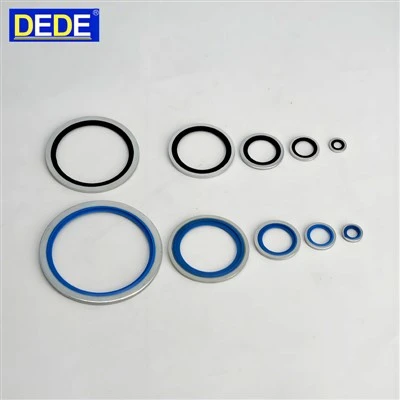
If you’re in the market for genuine TG4 Seals, I’m here to help. I can walk you through every step of verifying the seals before you receive them, offer competitive bulk pricing, and make sure you get the certification you need for your shipments. Whether you need 10 seals for a small local delivery or 10,000 for a big cargo fleet, hit me up to chat about what you need. Let’s make sure your cargo stays secure, no fakes, no headaches.
Industrial Seals References:
- International Cargo Security Association (ICSA). (2022). TG4 Seal Verification Guidelines.
- TG4 Global. (2023). ISO 17712 Compliance for High-Security Seals.
- U.S. Customs and Border Protection. (2021). Cargo Security Seal Requirements for International Shipments.
DEDE SEAL Co., Ltd.
DEDE Seal Co., Ltd. is one of the most experienced tg4 seal manufacturers and suppliers in China for over 35 years, featured by quality products and good price. Please feel free to buy bulk customized tg4 seal made in China here from our factory. Welcome to contact us for pricelist.
Address: Hunan Road, Pudong New Area, Shanghai, China
E-mail: info@dedeseal.com
WebSite: https://www.dedesealing.com/
