If you’ve ever worked on a plumbing, HVAC, or industrial piping setup, odds are you’ve heard people mix up “pipe stands” and “support brackets” like they’re interchangeable pieces. Spoiler: they’re not. As a pipe support brackets supplier who’s walked this line with installers, contractors, and even small-scale maintenance teams for years, I’ve seen this mix-up cause so many avoidable headaches—from wobbly pipe runs mid-test to last-minute reorder runs that throw timelines off. Let’s break this down straight, no stuffy industry jargon that makes your eyes glaze over. Pipe Support Brackets
First, let’s ground this in what these parts actually do. Piping systems (whether for water, gas, chemical, or even large-scale HVAC lines) can’t just hang or sit loose—they need something to hold them steady, offset the weight of the pipe and whatever’s flowing through it, and stop movement that could cause leaks, wear, or even safety issues. That’s where both stands and brackets come in, but their use cases, design, and how you install them are totally different.
Let’s start with pipe stands—sometimes also called pipe jack stands, or just “stools” around the shop, which is the nickname we use a lot for smaller ones. Think of a pipe stand like a temporary or permanent, freestanding base for a pipe. These are self-contained: they have a flat, wide base that sits on the floor, a vertical arm (adjustable a lot of the time, too, for height), and a curved cradle at the top that wraps around the pipe. The key here is that stands don’t attach to walls, ceilings, or other structures—they’re free-standing. You plop them where you need them, set the pipe in the cradle, and they hold it up right on their own.
What do people use stands for? Mostly temporary jobs first, but also some permanent setups where piping runs low to the ground, like outdoor water supply lines in a backyard, or low-lying industrial process pipes on a factory floor. I’ve seen guys use stands when they’re laying pipe for a new patio: instead of digging and mounting brackets every few feet, they drop a stand every 8 feet or so, slide the pipe in, and run it. That’s way faster for small, one-off projects where you don’t want to drill into concrete or siding. Stands are also adjustable, so if your pipe run has a slight slope for drainage, you can tweak the stand height to get that exact pitch without messing with the pipe. The downside? They take up floor space, and if a forklift or a foot knocks into one, the whole pipe can shift. That’s why stands aren’t ideal for high-traffic areas or long permanent runs—they’re more of a “set it and go” base.
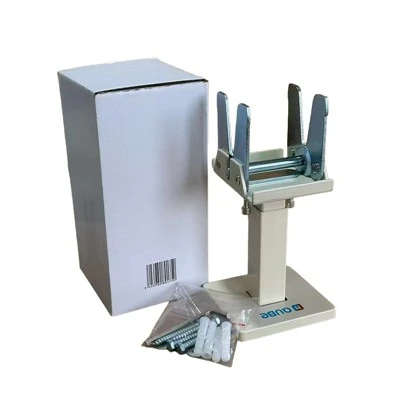
Now, support brackets—this is where my part comes in, since I sell these. A pipe support bracket is a part that attaches to another structure: a wall, ceiling, floor joist, or even a beam mounted to a wall. Instead of being a standalone base, it’s a little hook or clamp that fastens to that existing structure, then holds the pipe. There are a ton of types, too: some are simple U-bolts that wrap around the pipe and bolt to a wall mount, some are clevis brackets (think a small metal hinge that clamps the pipe), some are even hangers called “clevis hangers” that bolt to ceiling joists.
The big difference here: brackets are tied to a fixed structure. So they don’t take up floor space, they hold the pipe tight to something that’s already built, and they’re way more stable for long runs or areas with movement. For example, if you’re running a 50-foot gas line through a basement wall, you’re not going to stick a pipe stand every 10 feet—you’ll mount brackets to the concrete wall or floor joists, so the pipe is secured and won’t swing if someone bumps it. Brackets are also way better for piping that’s above head height, since stands would just be in the way. They’re also adjustable in a lot of cases too—you can get swivel brackets that let you tweak the pipe angle without redoing the whole mount.
Wait, let’s clear up a common confusion: some people call ceiling-mounted pipe supports “stands” too, but no—if it’s attached to a ceiling, it’s a bracket. Stands only work when they’re sitting on a solid surface, no mounting required. That’s the line I see guys cross all the time: they’ll try to use a floor stand for a pipe run 10 feet up, and it just doesn’t make sense. Or they’ll order a bracket for a temporary job, wasting time and drilling holes they don’t need.
Another big factor: weight capacity. Pipe stands are rated for specific weights, but since they’re free-standing, their max load is lower than most brackets of the same size. A 4-inch pipe stand might hold 200 pounds, but a 4-inch wall bracket can hold 350 pounds, because it’s anchored to a structure that’s way sturdier than the stand’s small floor base. If you’re running a thick, heavy pipe with hot water or chemicals, a bracket is almost always the safer pick.
Let’s run through a real example to make this concrete (pun intended). Say you’re a plumber doing a rough-in for a new office building. You have two options for the 2-inch copper water lines that run along the basement ceiling. Option 1: use pipe stands. You’d need to set a stand every 6 feet, tie each to the pipe with a strap, and hope no construction crew rolls a cart through and knocks a stand over. Option 2: use pipe support brackets, specifically clevis hangers mounted to the ceiling joists. You’d measure the joist spacing, mark where each bracket goes, drill into the wood, bolt the bracket up, slide the copper pipe in, and tighten the U-bolt. The brackets are anchored, so the pipe won’t move, they don’t take up floor space, and they’re way more reliable for a permanent installation. That’s the big picture: stands for quick, low-load, temporary or low-height jobs; brackets for permanent, high-load, elevated, or high-traffic runs.
Now, let’s talk about when you might actually use both. I had a customer last year who was running a 6-inch wastewater line from a new industrial tank to the main sewer. The line ran 20 feet from the tank (which sits on a concrete pad) to the wall, then up the wall to the sewer pipe. For the part near the tank, he used heavy-duty pipe stands—since that part was on the ground, he could adjust the height to get the right slope for wastewater, and it was fast to set. Once the line hit the wall, he switched to wall-mounted support brackets to hold it up the rest of the way, since that part was above floor level and needed to be secured to the building structure. That’s a perfect combo: using each part where it works best, instead of forcing one to do the other’s job.
Common mistakes I see: Guys buying a bunch of stands because they think they’re cheaper, then realizing they have to move them every time another trade comes through the job site. Or buying brackets without checking the structure they’re mounting to—like drilling into drywall instead of a stud, so the bracket pulls right out when the pipe’s loaded. Or mixing up size: a 2-inch pipe stand won’t fit a 3-inch pipe, same as a 2-inch bracket won’t work. That’s why it’s always better to double-check your pipe’s outer diameter before ordering, whether you’re getting stands or brackets.
Wait, another point: adjustability. A lot of stands have telescoping legs, so you can change their height in 1-inch increments, which is great for slope. Brackets have some adjustability too, but it’s usually in the mounting plate or the clamp, not the overall height of the pipe. So if you need to fine-tune a pipe’s vertical position, a stand might be easier, but if you need to secure it to a structure, a bracket is the way to go.
Let’s wrap this up with a quick cheat sheet, because I know guys love that:
- Pipe Stands = Freestanding, no mounting, low to the ground, temporary/quick jobs, lower weight capacity, floor space required.
- Support Brackets = Attached to walls/ceilings/joists, elevated or permanent runs, higher weight capacity, no floor space taken, more stable.
If you’re still not sure which you need, here’s my go-to question: Am I mounting this to something that’s part of the building or setup, or is it sitting on the ground? If it’s the first, get a support bracket. If it’s the second, a pipe stand is fine—just make sure it’s rated for your pipe’s weight.
And for all you out there who work on pipe systems, don’t hesitate to reach out to us if you need help picking the right bracket (or even figuring out if you need a stand to pair with it). We’ve got guys on our team who’ve been in the field, so we don’t just sell parts—we can talk through what’ll work for your specific job, no confusing sales pitches. If you’re tired of ordering the wrong part or dealing with wobbly pipe runs, hit us up to chat about your project.
HVAC Brackets References:
- Harris, J. (2021). Piping Systems Installation & Maintenance Handbook. Industrial Press Inc.
- National Plumbing Code of the United States. (2022). International Association of Plumbing and Mechanical Officials.
- Industrial Pipe Support Equipment Guide. (2023). Global Pipe Components Association.
Wanyuan Yuanwei Automation Equipment Co., Ltd.
With abundant experience, we are one of the most professional pipe support brackets manufacturers and suppliers in China. Please feel free to wholesale high quality pipe support brackets for sale here from our factory. Good service and punctual delivery are available.
Address: No.392, Wanbai Road, Baisha Town, Wanyuan City, Dazhou City, Sichuan Province
E-mail: wanyuanyuanwei@outlook.com
WebSite: https://www.yuanweiautomation.com/
