If you’ve ever stood in a chemical processing plant, a food and beverage factory, or even a residential water treatment system, you’ve probably seen a capacitive liquid level sensor tucked away in a tank—quietly doing its job without fanfare. For years, when customers reach out to my team as a sensor supplier, the first question after “will this work for my application” is almost always: “What’s the response time?” It makes total sense, too. Response time isn’t just a technical number on a spec sheet; it’s the difference between a system shutting down unexpectedly because it missed a level change, or a production line running smoothly with no unplanned stops. Capacitive Liquid Level Sensor
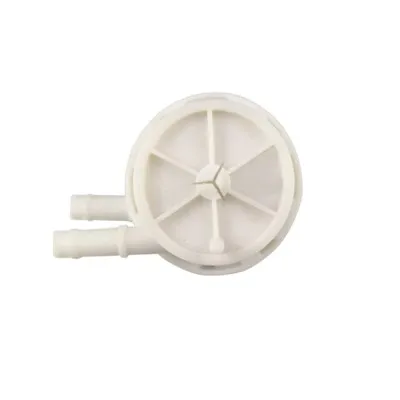
Let’s start with the basics, because to understand the response time, you have to remember how a capacitive sensor works. Unlike float sensors that physically move up and down with liquid, or pressure sensors that measure hydrostatic weight, a capacitive sensor operates on a simple principle: capacitance. It has two electrodes (usually two metal probes inside a tank, or a probe and the tank wall itself) that form a capacitor. When air surrounds the probe, the dielectric constant (the ability of a material to store an electric charge) is low—air has a dielectric constant of around 1. When liquid covers part of the probe, the dielectric constant jumps, because liquids are almost always higher than that of air (think water, which is 80, oil at 2 to 3, even chemicals like sulfuric acid that can hit 80 too). The sensor measures that change in capacitance and converts it into a level reading.
So why does response time matter here? Every time liquid rises or falls, the sensor has to detect that shift in capacitance and update its output signal (like a 4-20mA analog signal or a digital readout). If that update is slow, your control system might not get the signal it needs to adjust valves, pumps, or process lines in time. For example, in a brewery, if the sensor is too slow to detect when a fermentation tank is empty, you might run the pump dry and damage it. On the flip side, in a chemical blending system, a response time that’s too fast could lead to overcorrection, wasting raw materials.
Now, let’s get into the actual numbers. Most off-the-shelf capacitive liquid level sensors I’ve seen advertise response times between 100 milliseconds and 2 seconds. But here’s the thing: that number isn’t a one-size-fits-all figure. It depends on a handful of factors that we as sensor suppliers test in-house for every product we make, and that application engineers need to know to pick the right sensor.
First, there’s the sensor’s internal electronics. The core of a capacitive sensor is an oscillator circuit that generates the electric field between the electrodes, and a processing unit that translates that into a level reading. Cheaper, older designs might use basic circuits that are slow to filter out noise, leading to longer response times. Modern sensors, by contrast, use microprocessors and digital filtering that can process capacitance changes much faster. For example, our mid-range industrial capacitive sensors have a built-in adjustable response time—so you can set it to 200ms for fast-moving liquid in a small tank, or 2 seconds for thick, slow-moving fluids that would cause false readings if the sensor updates too quickly.
Next, the liquid itself is a big one. If you’re working with a conductive liquid like water, the response time is much faster than with a non-conductive, viscous liquid like oil or syrup. Wait, why? Conductive liquids react with the sensor’s electrodes, right? They create a parallel capacitance that’s easier to detect quickly, because the electric field changes sharply when liquid touches the probe. Viscous or high-resistivity liquids, though, tend to cling to the probe (a thing we call “wetting”) or move slowly, so the change in capacitance happens gradually. That means the sensor has to wait longer to confirm that the liquid has fully covered or uncovered the probe, instead of reacting to a partial, transient layer that might be a foam bubble or a drop. For example, a sensor testing with water might hit a 150ms response time, but when we test it with glycerin (a common non-conductive, thick liquid), that jumps to 700ms. We always note that in our spec sheets, too—we don’t just list a single number; we break it down by liquid type, because that’s what customers actually use.
Tank size and probe design also play a role. For small, compact tanks with short probes, the capacitance change is more concentrated, so the sensor can pick it up faster. For large tanks with long probes, the electric field is spread out, so the sensor’s processing unit has to average more data points to avoid noise from stray electric fields (like from nearby pipes or other equipment). That averaging adds a tiny bit of time, which pushes the response up a few hundred milliseconds. We design our long-probe sensors to have noise filters specifically tuned for large tanks, so we don’t sacrifice too much speed there.
You might be wondering: is there a way to make a capacitive sensor’s response time faster than 100ms? In lab tests, we’ve pushed some prototypes to 50ms, but that’s only for very specific applications with conductive, clean liquids. The problem is, the faster you make the sensor, the more likely it is to get false readings from transient events—like a foam bubble passing the probe, or a splash of liquid that only touches it for a fraction of a second. So that ultra-fast speed isn’t useful for most real-world jobs. It’s a trade-off: speed vs. accuracy.
I get this question all the time from customers who come to our team with a urgent application—like a high-speed bottling line that needs to detect empty bottles in milliseconds. They often ask, “Can’t you just crank up the response time?” And the answer is usually, “It depends on what’s around your sensor.” If your line has a lot of electrical noise from motors or conveyors, cranking the speed up will make the sensor jump every time a vibration causes a tiny capacitance shift. We work with those customers to adjust the response time, but also add noise shielding to the sensor’s electrodes, so they can get the speed they need without false triggers.
Another common mix-up: response time vs. update rate. Some people think they’re the same, but they’re not. Response time is how fast the sensor detects a change in liquid level, while update rate is how often it sends a new signal to the control system. A sensor might have a response time of 200ms, but send an update every 100ms—so you get more frequent readings, but the time it takes to react to a level change is still 200ms. That’s an important distinction for our customers, because control systems often have their own update rates too, so we make sure our sensor’s rate aligns with theirs.
Let’s talk about a real example from a customer we worked with last year. A water treatment company came to us complaining that their old capacitive sensors were making the plant shut down twice a month because they missed when the clean water tank was 90% full, leading to overflows. When we tested their setup, we found their old sensors had a response time of 3 seconds—way too slow for their tank, which fills in 10 seconds. We swapped them for our adjustable-response sensors, set to 500ms, and added a small shield around the electrode to block stray noise from the nearby pump. The customer later told us they haven’t had an overflow in 6 months. That’s the impact of getting the response time right.
Now, what if your application is less urgent? Like a small residential water tank that fills up overnight. In that case, a response time of 2 seconds is totally fine. You don’t need the sensor to react instantly, because the level changes slowly, and you don’t have to worry about overflowing in a matter of seconds. Many low-cost residential sensors use a fixed response time of 1 to 2 seconds, which works perfectly for that use case.
One thing I always emphasize to customers is that you shouldn’t pick a sensor just based on the lowest response time number. A sensor that’s 50ms fast is useless if it’s constantly triggering false alarms because of foam or noise. The sweet spot is matching the response time to your specific liquid and environment. Our team never pushes a customer to buy a sensor with a faster response time than they need, because that’s a waste of money and leads to more headaches.
So, to circle back to the original question: what is the response time of a capacitive liquid level sensor? It’s not a single number you can pull off a shelf. It’s a range, usually between 100ms and 2 seconds, that’s shaped by your sensor’s electronics, the liquid you’re measuring, your tank’s design, and the amount of electrical noise in your space. As a sensor supplier, we test every sensor we make under different conditions to give customers the most accurate, relevant numbers, not just generic ones.
If you’re currently shopping for a capacitive liquid level sensor and you’re not sure what response time is right for your application, our team is here to help. We’ve worked with everything from small residential tanks to large industrial chemical plants, and we can walk you through the specs, test a sample sensor in your specific conditions, and help you pick the perfect solution for your needs.
References
- Fraden, J. (2016). Handbook of Modern Sensors: Physics, Designs, and Applications. Springer.
- National Electrical Manufacturers Association (NEMA). (2020). Standard for Industrial Level Sensors, Type 6.
- Sensor and Instrumentation International. (2021). Capacitive Level Sensing: Principles and Application-Specific Considerations.
- Industrial Electronics Society. (2019). Proceedings of the 10th International Conference on Sensors and Instrumentation Technology.
Optical Level Sensor If you are interested in our capacitive liquid level sensors and would like to discuss your specific application needs, please contact our team for a personalized consultation.
Shenzhen Fineherc Technology Co., Ltd.
As one of the most experienced capacitive liquid level sensor suppliers in China, we’re featured by quality products and low price. Please feel free to buy discount capacitive liquid level sensor made in China here from our factory. Welcome to view our website for more information.
Address: 5th Floor, Building D, No. 39, Keji East Road, Torch Development Zone, Zhongshan City,China
E-mail: fineherc@hotmail.com
WebSite: https://www.fineherc.com/
