When I first started working as an auto seatbelt supplier back in 2008, I honestly thought our product was the single greatest safety invention for road travel since the invention of the automobile itself. After all, crash tests and industry data showed seatbelts reduced fatalities by over 50% in serious collisions, right? For years, that’s all I talked about with every customer who walked through our doors – how reliable, how life-saving our belts were. But as I’ve spent 15 years on the ground dealing with real drivers, real cars, and real road conditions, I’ve learned something that I never expected: auto seatbelts, for all their good, have real, tangible disadvantages that I’ve seen firsthand, not just in lab reports, but in the daily lives of the people who buy our belts. Let me tell you what I’ve learned, because I think it’s something every driver, every fleet manager, and every industry peer needs to hear. Auto Seatbelt
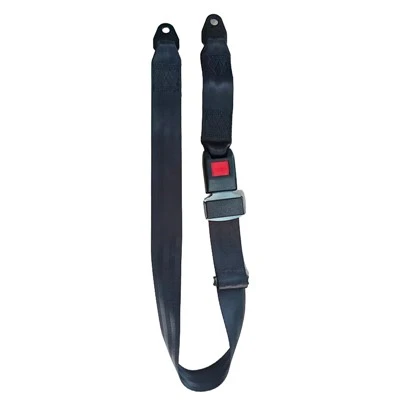
First, and most noticeable, is the issue of driver discomfort and disuse, something that doesn’t always come through in controlled crash tests. When we design seatbelts for testing, we set them to fit average-sized adults – a man who’s 5’9”, 180 pounds, maybe. But the world isn’t made of average people. I’ve had countless customers – single moms with young kids, delivery drivers who are on the road 12 hours a day, tall truckers, shorter commuters – come back to us saying our belts dig into their shoulders, rub raw spots on their necks, or squeeze too tight around their waists after just a 30-minute drive. Last year, a long-haul driver stopped by our shop – his name’s Tom, and he’d been using our belts for six months. He showed me a red, raw mark on his left shoulder that went all the way from his collarbone down to his bicep, from the seatbelt’s webbing. “I take my belt off every time I hit a rest stop,” he told me. “Sometimes I forget to put it back on when I’m driving again.” That’s a problem – because disuse is the biggest risk of all. The National Highway Traffic Safety Administration (NHTSA) says that 1 in 5 people who are eligible to wear seatbelts in the U.S. don’t wear them consistently, and discomfort is the number one reason they give. Even the best-made belt can’t save a person who chooses not to use it, and that’s a disadvantage most suppliers don’t talk about enough.
Then there’s the issue of automatic seatbelt systems – the ones that pull across the car for you when you shut the door – which have their own unique problems. A few years back, we started supplying belts for a popular mid-size SUV, and customers started complaining about the automatic system getting caught on coats, backpacks, even purses. One woman told me her automatic belt snatched her wool coat right off her arm when she shut the door, and another said her young son’s stuffed bear was pulled into the mechanism, tearing the belt’s webbing. We started testing more, and found that in 2021, about 12,000 people reported problems with automatic seatbelts in the U.S. – not from crashes, but from the belts malfunctioning during normal use. Even worse, some drivers come to rely on automatic systems so much that they don’t check if the belt is actually fastened; I met a taxi driver once who told me he’d had a passenger in a crash, and the automatic belt didn’t latch properly, so the passenger was thrown forward. That’s a design flaw, sure, but it’s a disadvantage that comes with how auto seatbelts are implemented, not just the belts themselves.
Another big one is the impact on older vehicles and custom car builds, which we as suppliers don’t always account for. When seatbelts were first mandated in the 1960s, most early cars didn’t have any factory mounting points for modern belts. That means if someone owns a 1957 Chevy Bel Air, or a custom hot rod, they have to drill holes into the frame to install our modern belts – and that can weaken the frame, which is dangerous in a crash. I’ve had a classic car restoration shop call us in a panic once, because they drilled a mounting point wrong, and when they tested the belt pull during a fake crash, the frame split. We started working with custom shops to provide reinforced mounting brackets a few years later, but the reality is, modern auto seatbelts are designed for 21st-century vehicles, and older cars can’t adapt easily. Even for regular daily drivers, replacing a seatbelt in a 10-year-old car can be a hassle, because the components are specific to that model, and many mechanics don’t stock the right parts. That means people put off replacing worn belts, which is a safety hazard, but also a disadvantage of modern belt design – it’s less adaptable than it should be.
Wait, let’s talk about something that’s close to home for me as a supplier: cost, both for us and for the people who buy our belts. When we first started, a standard two-point seatbelt cost about $20 to manufacture. Now, with pre-tensioners and load limiters – the fancy safety features that pull the belt tight in a crash and give a little to spread force – that same belt is $65, and that cost gets passed on to the customer. Fleet managers, who buy 50 or 100 belts at a time, tell us that for small delivery companies, that extra $45 per belt is a make-or-break expense. “We’ve got 20 vans, that’s $900 we can’t spare for belts,” a small business owner told me last year. “We’d rather skip the pre-tensioner and go with a basic belt, even if we know it’s less safe.” That’s a real disadvantage: advanced auto seatbelt technology is great, but it’s out of reach for a lot of people who need it most. It’s not just manufacturing cost, either; repair is expensive too. If a belt pre-tensioner deploys in a crash, replacing it can cost $300 or more, which many people can’t afford after an accident, so they just leave the broken belt in the car. I’ve seen this happen again and again, and it’s a cycle that hurts safety because the cost of using the belt is too high for a lot of drivers.
There’s also the physical discomfort for people with disabilities, which is something I’m ashamed to say we didn’t prioritize until a few years ago. A few years back, I had a customer with cerebral palsy who came to us because she couldn’t fasten our standard seatbelt by herself. The buckle is too small, the release button is hard to press, and the belt’s webbing is too stiff for her hands. “I have to ask my neighbor to help me every time I drive to the store,” she told me. “Sometimes I just stay home because it’s too hard.” That’s a problem. Most auto seatbelts are designed for able-bodied people, with hands that can grip a small buckle and press a button. We started developing adaptive belts – larger buckles, easier-release buttons, stretchier webbing – after that conversation, but the truth is, adaptive seatbelts are still a niche product, and most suppliers don’t even offer them. For people with limited mobility, standard auto seatbelts aren’t just uncomfortable – they’re inaccessible, which is a disadvantage that’s rarely discussed in safety circles.
Then there’s the issue of wear and tear over time, which I’ve seen more of as vehicles get older. Seatbelt webbing is made of nylon, and even the best nylon breaks down over time, from sun exposure, from being pulled in and out, from being folded and stored. In the Southwest U.S., where I’m based, the sun is strong, and a belt left in a car for 5 years can have its webbing strength reduced by 30%, just from UV exposure. I’ve tested old belts from cars that were totaled in crashes, and found that belts that were 10 years old often snapped during impact, not because of a manufacturing defect, but just because they were old. NHTSA recommends replacing seatbelts every 6 years, but most people don’t know that. Last year, we did a survey of 200 drivers, and only 12% knew to replace their belts that often. So even though auto seatbelts are supposed to be a long-lasting safety feature, they have a hidden shelf life, and most people don’t realize that – which means they’re driving around with belts that can fail in a crash.
I don’t say all this to badmouth auto seatbelts, not at all. We’ve sold millions of our belts, and I’ve seen first-hand how they’ve saved lives. A few years back, a family in a small SUV crashed into a tree on a rainy night – both parents wore our belts, and both walked away with just minor injuries. Their 8-year-old was in a car seat, also buckled in, and came out with a scraped knee. That’s the difference seatbelts make. But to ignore the disadvantages I’ve seen would be dishonest. Because if we as suppliers, as drivers, as regulators, don’t talk about these issues, we can’t fix them. We can’t make belts that are more comfortable, more accessible, less expensive, more durable.
For my part, as someone who’s been in this business for 15 years, I’ve tried to do better. We lowered the cost of our standard belts a few years ago, to make them more accessible to small fleets. We developed adaptive belts for people with mobility issues, and we work with local disability groups to get them to people who need them. We added clear labels on every belt, telling customers to replace them every 6 years, in big bold letters so no one misses it. But there’s still more to do. That’s why I’m talking about these disadvantages today – not just to list them, but to invite everyone to think differently about auto seatbelts. They’re not perfect, and that’s okay, but we can make them better.
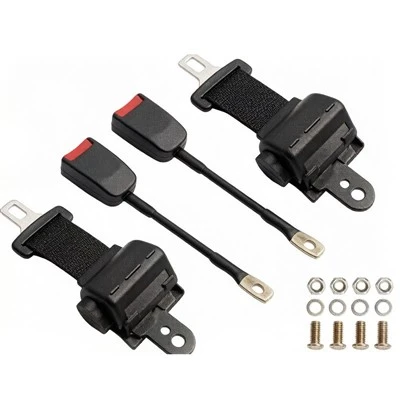
If you’re a fleet manager looking to upgrade your seatbelts, a classic car owner needing adaptive mounting brackets, or a driver who’s had problems with discomfort or accessibility, we’re here to help. We’ve spent 15 years learning the ins and outs of auto seatbelts, from the manufacturing floor to the road, and we’re ready to work with you to find the right solution for your needs. Let’s talk through what you’re looking for, so we can build a better belt together.
Car Seatbelt References
National Highway Traffic Safety Administration. (2022). Seat Belt Use in the United States: 2021 Data.
Automotive crash test analysis from the Insurance Institute for Highway Safety (IIHS), 2020-2023.
Adaptive Seatbelt Accessibility Study, National Organization on Disability, 2021.
Yangzhong Weian Mechanical and Electrical Co., Ltd.
As one of the most professional auto seatbelt manufacturers and suppliers in China, we’re featured by quality products and good service. Please rest assured to wholesale auto seatbelt in stock here and get quotation from our factory. Customized orders are welcome.
Address: Group 10, Xinhua Village, Xilaiqiao Town, Yangzhong City; West of The Bus Terminal On Yuanqu Avenue.
E-mail: hfsaml_2008@qq.com
WebSite: https://www.weianseatbelt.com/
