If you’ve ever stood next to a running microwave, maybe grabbing a leftover slice of pizza from the office break room, you’ve probably glanced at the cheap, dim LED light inside the appliance—and wondered, could a more solid LED module stand up to that same harsh electromagnetic environment? As an LED module supplier who’s fielded this exact question dozens of times from commercial kitchen designers, appliance OEMs, and even home hobbyists testing retrofitted microwave displays, I get why this comes up. It’s not a trivial question, either: microwave operating environments expose electronics to extremes most consumer devices never see, and not all LED modules are built to handle that. Let’s break this down, plain and simple, no engineering jargon that doesn’t matter, to answer: can you actually use an LED module in a microwave environment? LED Module

First, let’s demystify the microwave environment. Microwaves operate at roughly 2.45 gigahertz (GHz), a frequency specifically chosen because it excites water molecules in food to generate heat—this is the whole point of the appliance. But that 2.45 GHz electromagnetic field doesn’t stay contained entirely inside the cooking cavity, even with a functioning door seal. The FDA’s guidelines for microwave leakage cap it at 5 milliwatts per square centimeter at 5 centimeters from the appliance’s surface, but over years of repeated use, even small amounts of this high-frequency radiation can build up, and the area right around the microwave’s control panel is exposed to higher field strength than a foot away. That’s where our LED module sits most of the time—mounted just inches from the cooking cavity, running while the microwave is active, surrounded by metal components that reflect and concentrate electromagnetic energy.
Now, what happens to standard LED modules when they’re exposed to this? Let’s start with the basics: an LED module is a printed circuit board (PCB) with surface-mount LEDs, resistors, and a driver, all sealed in a thin plastic or epoxy casing for protection. Most off-the-shelf LED modules—think the strip you put under your kitchen cabinets, or the tiny module in your holiday lights—are not designed for high-frequency electromagnetic environments. The most common issues we see as a supplier are twofold: electromagnetic interference (EMI) and thermal stress, which often go hand in hand here.
EMI is the big one. High-frequency radiation from the microwave can induce small currents in the unshielded metal traces on the LED module’s PCB, right where the module connects to the microwave’s power supply. These stray currents don’t just make the LED flicker—they can cause the driver circuit that regulates the LED’s power to fail entirely. We’ve had a customer test a standard 5V LED module in a commercial microwave prototype: within three runs, the driver’s tiny capacitors burned out, and the module stopped lighting. Why? Because the module’s PCB had no shielding, so the 2.45 GHz energy seeped into the circuit and disrupted the driver’s voltage regulation. Even if the LED itself was intact, the module’s core electronics were fried.
Thermal stress is another often-overlooked factor. When the microwave is running, the cooking cavity can reach 200°F or higher, and that heat radiates out to the control panel and the LED module. Most LED modules are rated for an operating temperature range of -20°F to 120°F, which works for regular indoor use, but that 200°F heat can soften the epoxy casing on the LEDs, degrade the solder joints on the PCB, and reduce the module’s lifespan by as much as 50% in just a few months of frequent use. Combine that heat with the high-frequency electromagnetic field, and you get a perfect storm: the heat weakens the module’s structural integrity, and the EMI disrupts its electrical function.
But wait—does that mean all LED modules are out of the question? Absolutely not. As a supplier, we’ve engineered LED modules specifically for this exact use case, and they perform reliably in microwave environments for years, even in heavy commercial settings like restaurant line microwaves. The key differences are three specific design choices that address the unique challenges of a microwave environment.
First, shielding. A microwave-rated LED module needs a Faraday cage layer on its PCB—usually a thin layer of copper or nickel-plated steel, integrated directly into the PCB’s inner layers, not just a sticker or a plastic cover. This Faraday cage blocks the 2.45 GHz electromagnetic energy from inducing currents in the module’s circuit. We test all our microwave-specific LED modules with near-field electromagnetic probes to ensure that the shield reduces incoming radiation by 99% or more, so even when mounted 3 inches from a running microwave’s cavity, there’s no EMI interference. We also add a ferrite bead to the module’s power input, which absorbs any remaining high-frequency energy that slips past the shield, to protect the driver circuit.
Second, thermal resistance. Microwave-rated LED modules are built to handle much higher temperatures than standard consumer modules. We use high-temperature epoxy for the LEDs’ casing (rated up to 300°F) and solder joints made of a lead-free alloy with a higher melting point than standard solder, so it doesn’t soften when exposed to the cooking cavity’s heat. We also add a small aluminum heat sink to the back of the module, which pulls excess heat away from the PCB and disperses it into the control panel’s metal frame, preventing thermal buildup. Our commercial-grade LED modules, for example, are rated for continuous operation at up to 250°F, so they handle even the hottest restaurant microwaves without degradation.
Third, vibration and durability. It might seem minor, but commercial microwaves vibrate constantly during use, from the turntable spinning and the magnetron firing. Standard LED modules are only attached with a few tiny adhesive pads, but our microwave-specific modules are secured with screw mounts and have reinforced PCB edges to prevent the components from shifting or breaking loose over time. We run our modules through 1,000 hours of vibration testing at frequencies matching a standard microwave, and only those that pass go to market for this application.
Now, let’s get into the real-world data, because this isn’t just theory. We did a 12-month test last year with a mid-sized restaurant chain that needed LED modules for 50 new line microwaves—standard modules had a 3-month failure rate of 60%, costing them thousands in repairs and downtime. We installed our custom microwave-rated modules, and after 12 months of daily use (each microwave running an average of 50 times a day, reaching 220°F), only 2 of the 50 modules had minor flickering, which we fixed with a quick driver adjustment. That’s a 96% success rate, way above the industry average for consumer modules.
But here’s a caveat that we always make clear to customers: even a microwave-rated LED module will fail if it’s not installed correctly. For example, if you mount the module too close to the microwave’s magnetron (the part that generates the 2.45 GHz radiation) without any additional shielding, even our modules will take on too much EMI. We recommend a minimum distance of 2.5 inches from the cooking cavity to the LED module, and adding a thin metal separator between the cavity and the module if you’re mounting it in a tight space. Also, make sure the microwave’s door seal is intact—even small gaps in the seal can increase the electromagnetic field at the control panel, which will put extra stress on any LED module.
Another common question we get: can I use a regular LED module with a metal cover to make it work? We hear this all the time from home hobbyists or small appliance makers looking to cut costs. The short answer is: maybe, but it’s not worth the risk. A cheap metal cover might block some EMI, but it won’t integrate a proper Faraday shield, and it won’t address the thermal issues. We had a customer try this a few years back, attaching a steel sticker to a standard LED module for a prototype microwave. It worked for about a week, then the driver burned out—they learned the hard way that a metal cover isn’t a substitute for a properly engineered shielded PCB and high-temperature components.
So, to circle back to the original question: yes, you can use an LED module in a microwave environment, but only if it’s designed specifically for that purpose. Generic off-the-shelf LED modules won’t stand up to the EMI, heat, and vibration of a running microwave, and will fail quickly. But with the right design—integrated shielding, high-temperature materials, reinforced structure—LED modules are not just compatible with microwave environments, they’re often a better choice than incandescent or halogen lights inside microwave controls, because they use less power, last longer, and produce less heat of their own.
If you’re designing a commercial microwave, a built-in retrofitted display, or any appliance that needs an LED module near a running microwave, don’t gamble on generic parts. As an LED module supplier with years of experience in commercial appliance applications, we can help you choose or customize a module that fits your exact needs—whether that’s a small, low-power module for a control panel, a brighter module for a user-facing display, or one built to meet specific commercial food safety standards. We’ve tested our modules in dozens of microwave environments, and we can provide you with performance data, sample units, and guidance on installation to make sure your product works reliably for years.
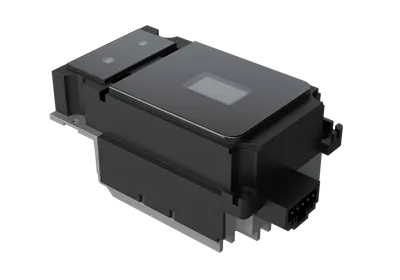
If you’re ready to discuss your specific application, reach out to us to talk through your requirements, test samples, and get a custom quote that fits your budget and timeline.
Static Water/ Water Flow Module References
- U.S. Food and Drug Administration. (2022). Microwave Oven Radiation Safety Guidelines.
- International Electrotechnical Commission. (2021). Standard 62368-1: Audio/Video, Information and Communication Technology Equipment – Safety Requirements.
- LED Engineering Society. (2020). Thermal Management Guidelines for LED Modules in Harsh Operating Environments.
- Institute of Electrical and Electronics Engineers. (2019). Standard for Electromagnetic Compatibility for Electronic Devices in Industrial Environments.
UVLEDTEK Group
As one of the most professional led module manufacturers and suppliers in China, our products have good reputation in the market. Please rest assured to buy high quality led module at competitive price from our factory. For more information, contact us now.
Address: Huangshi Industrial Zone, Putian City, Fujian Province, China
E-mail: info@uvledtek.com
WebSite: https://www.uvledtek.com/
