Hey there! If you’re a building owner, facilities manager, or anyone who’s ever had to research commercial refrigeration for your rooftop, you’ve probably wondered: what’s the average cost of a commercial rooftop refrigeration unit? Spoiler alert—it’s not a one-size-fits-all number, and as someone who’s been supplying these units for years, I’ve seen way too many folks guess wrong and end up with sticker shock later. Let’s break this down like we chat over coffee, no jargon, no confusing spreadsheets. Rootop Refrigeration Unit
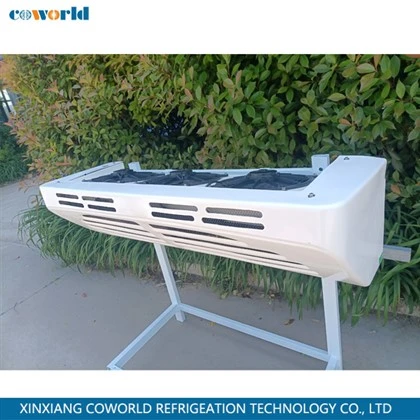
First off, let’s get one thing straight: commercial rooftop refrigeration (or RTR units, as we in the biz call ’em) aren’t your home fridge. They’re big, loud, and built to handle 24/7 loads for restaurants, grocery stores, convenience stores, even big-box retailers. The cost swings hard depending on a few key factors, and that’s where most people mess up.
Let’s start with the basics: the average base cost of a new RTR unit is usually between $8,000 and $25,000. Wait, that’s a huge range, right? Yeah, that’s because it depends on size, capacity, and type. A small 2-ton unit (perfect for a tiny corner store’s beverage cooler) might land around $8k to $12k. A medium 5-ton for a mid-sized restaurant’s walk-in and display cases? That’s $15k to $20k. And the heavy-duty 7-ton+ units for big grocery stores with full-service butcher shops and open deli? Those can hit $25k and up. That base cost is just the unit itself, by the way—we’ll get to installation later, because that’s where the real budget busters hide.
Next, let’s talk about the different types of RTR units, because not all are created equal. There’s standard single-pack units, which are the most common—they’ve got all the compressors, evaporators, and controls in one box, easy to mount on a rooftop. Those are the budget-friendly pick, usually the $8k to $18k range. Then there’s dual-pack units, which are two smaller units paired together for extra capacity—great if you need redundancy (so if one breaks, the other keeps cooling) for a busy restaurant. Those run a bit more, $12k to $22k. And then there’s modular units, which let you add more capacity as your business grows—ideal for places that expand their food offerings often. Modulars are the priciest, from $18k up, but they save you money long-term instead of buying a whole new unit later.
Wait, don’t sleep on energy efficiency, either. A lot of folks go for the cheapest unit upfront, but that can backfire hard on utility bills. RTR units with SEER (Seasonal Energy Efficiency Ratio) ratings above 14 are way more efficient than older models, and they cost a bit more—usually $1k to $3k extra. But over 5 years, that extra cost pays for itself in lower electric bills. I’ve had customers who opted for a cheaper, lower-efficiency unit end up paying $500+ more a month in power, which adds up to $30k over 5 years. That’s way more than the difference in upfront cost, so we always push efficiency as a smart investment, not an extra expense.
Now, installation costs—this is the part that catches almost everyone off guard. The unit itself is half the battle, but getting it on the rooftop, hooked up to electrical lines, refrigeration lines, and venting? That can add $5k to $15k to the total cost. Why the range? If your roof is easy to access, has good structural support, and all the hookups are already there, installation might be on the lower end. But if your roof is old, needs reinforcement to hold the unit (RTR units can weigh 500+ lbs, sometimes way more), or you have to run new electrical lines from the ground to the rooftop, that’s when costs spike. We’ve had a customer with a 10-year-old flat roof that needed structural repairs just to hold a 5-ton unit—installation ended up being $12k instead of $7k, which doubled their total cost. It’s not fun, but it’s necessary to avoid safety issues or the unit collapsing through the roof.
Then there are extra add-ons that people might forget to budget for. Things like monitoring systems (to track temperature, prevent spoilage, send alerts if the unit breaks) which add $500 to $2k. Noise reduction kits (since rooftop units can be loud, and if your building is near a residential area, you might need them to avoid complaints) are $300 to $1k. And permits—every city has different rules, but rooftop installation permits can run $200 to $1,000. None of these are mandatory, but skipping them can lead to big headaches down the line. We always tell customers to set aside 15-20% of the total unit cost for these extras, just so they don’t blow their budget.
What about used units? Some people ask about saving money by going pre-owned, and yeah, that’s an option—usually $3k to $10k, but let’s be real: there are huge risks here. Used RTR units might have hidden wear and tear, old refrigerants (which are less efficient, and some are even being phased out by regulations), and no warranty. I’ve had customers who bought a used unit for $4k, only to have the compressor break 6 months later, costing $2k to fix, and then another $1k for parts a month after that. It ends up being more expensive than buying a new, reliable unit with a 5-10 year warranty. We don’t push used units here, because we’ve seen too many people regret cutting corners.
Now, let’s talk about average total costs, putting it all together. For a small unit (2-ton, standard, mid-efficiency), total cost with installation is around $15k to $20k. Medium (5-ton, dual-pack, high-efficiency): $25k to $35k. Large (7-ton+, modular, ultra-efficiency): $40k to $60k. That’s a far cry from the $8k base cost, but it’s the real number you need to plan for.
So why does this matter? Rooftop refrigeration is not something you want to cheap out on. If your unit breaks, your restaurant’s food spoils, your grocery store’s produce goes bad—you’re losing way more money than the cost of a good unit. We’ve worked with hundreds of businesses, and the ones that take the time to pick the right size, efficiency, and unit type end up saving thousands in the long run.
If you’re reading this and thinking, “Okay, but what do I need for my specific business?” That’s where we come in. We don’t just sell units—we help you figure out exactly what size, type, and efficiency works for your space, your menu, and your budget. We can walk you through installation requirements, help with permit guidance, and even offer maintenance plans to keep your unit running for years. No pressure, no salesy pitches—just straight talk about what works for you.
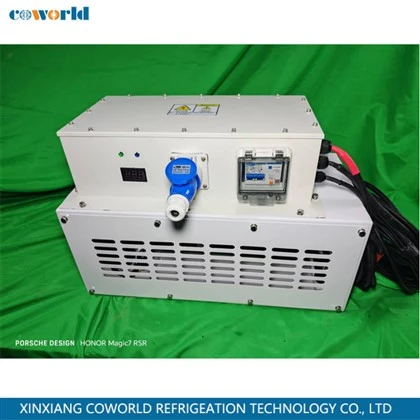
If you’re ready to get a custom quote, or even just have questions about cost, unit types, or installation, reach out to our team for a procurement consultation. We’ll break down all the numbers, answer every question you have, and make sure you don’t end up with a unit that’s too big, too small, or too expensive for your needs. No guesswork, no hidden fees—just clear info to help you make the best choice for your business.
Electric Refrigeration Unit References:
- U.S. Energy Information Administration. (2023). Commercial Building Energy Consumption Survey: Refrigeration Equipment.
- Air-Conditioning, Heating, and Refrigeration Institute (AHRI). (2024). Rooftop Commercial Unit Performance Standards and Cost Benchmarks.
- National Association of Retailers. (2022). Commercial Facilities Maintenance Cost Guide: Rooftop Refrigeration Units.
Xinxiang Coworld Refrigeration Technology Co., Ltd.
As one of the most professional rootop refrigeration unit manufacturers and suppliers in China, our products have good reputation in the market. We warmly welcome you to buy cheap rootop refrigeration unit for sale here from our factory. If you have any enquiry about cooperation, please feel free to email us.
Address: B103 ROOM, GT CITY, NO.199 ZHENGZHONG ROAD, HIGH TECH ZONE, XINXIANG CITY, HENAN PROVINCE, CHINA
E-mail: coworldfrio@hotmail.com
WebSite: https://www.coworldthermo.com/
