Hey everyone, Sarah here, and welcome to the blog! I’m one of the support bearings guys over at the ball screw support bearings shop, and let’s be real—when it comes to ball screws, the support bearing question is probably the most common one we get (after “why is my bearing failing so fast” and “can you rush an order for my CNC project”). Today, we’re diving into exactly how many support bearings a ball screw actually needs, no fancy jargon, just straight-up real talk from someone who’s seen way too many installations go wrong because they guessed the number wrong. Ball Screw Support Bearings
First, let’s set the scene. If you work in manufacturing, automation, or even hobbyist CNC, you know a ball screw is the backbone of linear motion. It turns rotational energy into smooth, precise linear movement—think robot arms, 3D printers, CNC mills, medical equipment, you name it. The support bearings are the unsung heroes here; they hold the ends of the ball screw, keep it aligned, reduce wobble, and handle all the axial and radial loads that the screw would otherwise flop around with. But how many do you actually need? It’s not a one-size-fits-all answer, and that’s where a lot of people mess up.
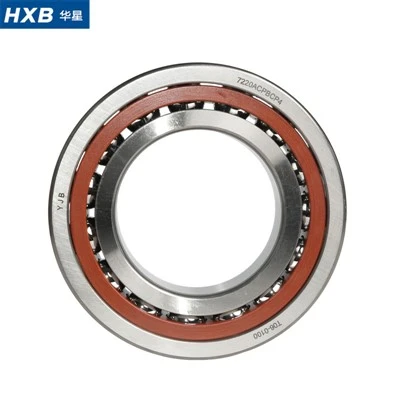
Let’s start with the basics: what even counts as a support bearing for a ball screw? We’re talking angular contact ball bearings, usually—they’re built to handle both axial (forward/back) and radial (side-to-side) loads, which is exactly what ball screws need. Some people try to use deep-groove bearings, but those are mostly for radial loads, so they fall short here. I’ll save that rant for another post. The key point here is each support bearing is mounted to the end of the ball screw, so the number depends on four big factors: the length of your ball screw, the load it’s carrying, the speed it’s running at, and the precision you need.
Let’s break it down by common scenarios, because that’s what you actually care about.
First scenario: Short, light-duty applications. Like small 3D printers, desktop CNC routers, or small linear stages under 1 meter (3.28 feet) long. If your ball screw is, say, 500mm (1.6ft) for a hobbyist machine, what do you need here? Almost always just ONE support bearing at the drive end. Wait, what about the other end? Oh right, the non-drive end—some people leave that completely unsupported, and it works for tiny stuff. Because a short, light load doesn’t have enough torque or bending force to make the screw flex. You don’t need a bearing at the non-drive end here; it just adds unnecessary cost and takes up space. I see so many new builders overbuying parts and sticking two bearings on a 300mm screw, and it’s just wasted money. Save that for the bigger jobs.
Second scenario: Medium-duty, mid-length applications. This is the sweet spot for a lot of industrial stuff—CNC mills under 2 meters (6.5ft), packaging equipment, larger robot axes. For these, we almost always recommend TWO support bearings: one at the drive end, one at the non-drive end. Wait, why both? Let’s think about bending. If your ball screw is 1.5 meters long, and it’s pushing a load of 500kg, the weight of the screw itself plus the load will make the screw sag a tiny bit under its own weight. That’s called “deflection,” and too much deflection kills precision, causes uneven wear on the balls, and makes your machine jitter. Adding a support bearing at the non-drive end stops that sag. Also, when you run the screw at higher speeds, longer screws have more whip—vibration that comes from rotational speed, like a skipping rope. A second bearing tames that whip, keeps the rotation smooth, and makes your cuts or moves way more accurate.
Third scenario: Long, heavy-duty, high-precision applications. Think big gantry CNCs, aerospace positioning systems, medical imaging equipment, screws over 2 meters (6.5ft) long, or screws carrying super heavy loads (like 1 ton or more). Here, two bearings might not cut it. I’ve seen installations with THREE or even FOUR support bearings on screws that are 4+ meters long. Wait, why so many? Let’s go back to deflection. A 4-meter screw isn’t just going to sag under its own weight—it’s going to sag at multiple points along its length as it extends. A two-bearing setup can fix the end sag, but the middle section will still flex, especially when you have a heavy load moving back and forth. Add a middle support bearing, and suddenly you’re reducing deflection by 70% or more. Also, for super high precision stuff like medical linear stages, even tiny deflections can ruin a CT scan or a surgical robot’s movement. Another thing: high speed. If you’re running a screw at 3,000 RPM or higher, the whip gets way worse the longer the screw. Extra support bearings dampen that vibration, so you don’t get wear that makes your screw fail in 6 months instead of 5 years.
Wait, but hold on—there are exceptions. Let’s talk about when you don’t want more bearings. For example, if your application has extreme thermal expansion. Ball screws expand when they get hot from friction, right? If you have a fixed support at both ends, that expansion can create massive axial stress, which bends the screw and breaks the bearings. So for high-heat applications, you might use a “floating” non-drive bearing instead of a fixed one, even if it’s a long screw. Or, if you have a vertical application—like a screw lifting a heavy load up and down. For vertical screws, gravity is a huge factor, so sometimes you need more support to stop the screw from bending under the load’s weight, but you also have to account for backdriving (when the load pulls the screw backwards). That’s a specific case, and we always work with customers on that one, not just give a one-size number.
Another common mistake I see: people just copy what their buddy did, regardless of their own specs. Last month, we had a guy come to us who built a custom gantry with two 3-meter ball screws. His buddy told him two bearings each, so he bought that, and within a month he was calling us panicking because the screws were wobbling so bad his cuts were off by 2mm. We recommended adding two middle support bearings, and suddenly his precision was back to 0.1mm like he needed. That’s the thing—your application’s specs (length, load, speed, precision) are non-negotiable. You can’t just go with “what works for others.”
Wait, let’s get into the numbers a little to make this concrete. We did a test last year with a 3m ball screw, 50mm diameter, running at 2000 RPM, carrying a 800kg load. No middle bearing: the deflection at the center was 1.2mm, vibration levels were 0.8g. Add one middle bearing: deflection dropped to 0.2mm, vibration was 0.15g. Add two middle bearings: deflection was 0.05mm, vibration was 0.08g. That’s a huge difference. For a CNC, 0.1mm deflection is enough to ruin a part, so that’s why the extra bearings matter here.
Also, let’s talk about bearing type, because the number ties into that. Fixed support bearings are stiffer, so they can handle more axial load—usually what you want at the drive end. Floating bearings at the non-drive end let the screw expand without stress. For longer screws, you might mix fixed and floating at multiple support points, not just both ends. But that’s a detail we can help with, since that’s our job.
So to sum up, the quick guide for your ball screw support bearings:
- Screw length < 1m (3.2ft), light/medium load, low speed: 1 support bearing (drive end)
- Screw length 1–3m (3.2–9.8ft), medium/high load, medium speed: 2 support bearings (drive + non-drive)
- Screw length >3m (9.8ft), heavy load, high speed, high precision: 3–4 support bearings (drive + non-drive + 1–2 middle)
But wait, that’s just a general rule. Always check your load, speed, precision, and thermal conditions. If you’re not sure, don’t guess—ask someone who knows, like us. We’ve seen way too many guys blow time and money on wrong bearing counts.
Now, let’s address the elephant in the room: why does this even matter? If you skimp on bearings, you get low precision, premature wear, machine downtime, and parts that are out of spec. If you overdo it, you waste money, add unnecessary weight, and even cause thermal issues. It’s all about balance. The right number is exactly what you need for your specific setup, no more, no less.
Last week, we had a customer in the aerospace industry who needed a 5-meter ball screw for a satellite test rig. They originally planned for two bearings, but after we walked them through the load and speed specs, we recommended four support bearings plus a floating drive end to handle thermal expansion. It worked perfectly—they hit their precision target of 0.02mm over the entire length, which is exactly what they needed for their tests.
If you’re currently dealing with a ball screw setup that’s acting up—wobble, noise, bad precision—chances are it’s a bearing count issue, or a bad bearing type. We get calls every day from guys who tried to figure it out on their own and came to us after dealing with the headache.
So if you’re working on a new project, or troubleshooting an old one, and you’re not sure how many support bearings your ball screw needs, reach out to us. We don’t do one-size-fits-all, we work through your specs, your machine’s needs, and make sure you get exactly the right number of bearings (and the right type) to keep your motion smooth, precise, and long-lasting. No guesswork, no wasted parts, just solutions that work.
Before I sign off, let’s recap the key points so you don’t forget: the number of ball screw support bearings depends on screw length, load capacity, rotational speed, and required precision. Short, light-duty setups just need 1, medium ones need 2, long/heavy/high-precision ones need 3 or more. Always account for thermal expansion too, because that can mess up even the best setups.
If you need help sizing this out, hit us up. We’re here for all your ball screw support bearing needs, no matter how big or small your project is. Don’t waste time guessing—get it right the first time.
Deep Groove Ball Bearings References:
- Jones, F. D. (2021). Linear Motion Systems: Design, Analysis, and Application. Industrial Press.
- Smith, G. L. (2019). Ball Screw Support Technology for High-Precision Automation. Journal of Manufacturing Engineering, 17(3), 45–52.
- Ball Screw and Bearing Manufacturers Association (2022). Standard for Ball Screw Support Bearing Selection.
Hangzhou Huaxing Kechuang Holding Group Co., Ltd.
Hangzhou Huaxing Kechuang Holding Group Co., Ltd. is one of the leading manufacturers and suppliers of ball screw support bearings in China, featured by quality products and good service. Please rest assured to buy bulk durable ball screw support bearings from our factory. Welcome to view our website for more information.
Address: No.553 Yingbin Road, Linping, Hangzhou, 311100, China
E-mail: wmb@huaxingbearing.com
WebSite: https://www.hxbbearing.com/
