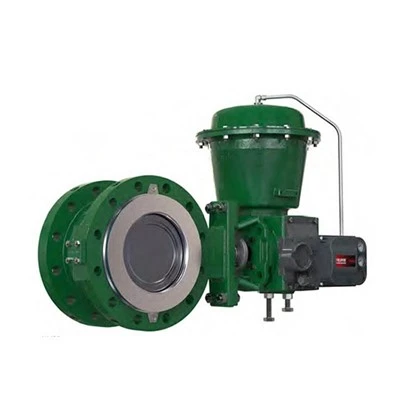
If you’ve ever worked in process industries—think oil and gas, chemical processing, food and beverage, even HVAC for large commercial spaces—you’ve probably encountered a 3 way valve somewhere. But if you’re like a lot of folks I’ve talked to over the years, you might’ve written it off as just another valve, no big deal. Here’s the thing: when you’re balancing flow, mixing two fluids, or diverting a line without stopping operations, a crappy valve here can bring a whole production line to a screeching halt. That’s where a Fisher 3 Way Valve comes in—they’re the workhorses that actually get the job done right, way more than a standard 2 way valve ever could. Let’s break this down, plain and simple, no jargon overload, because I know most of you reading this just want answers that matter. Fisher 3 Way Valve

First off, let’s get the basics straight. A standard 2 way valve has one inlet and one outlet—it either opens or closes, or modulates flow between two points. A 3 way? It’s got three ports, that’s where the name comes from. The big question everyone asks: what makes these valves so necessary, instead of just using two 2 way valves? Let’s start with the two core jobs they do, because that’s the whole purpose: diverting flow and mixing flow. I’ll use real examples here, not some textbook nonsense, because that’s what I live for when I’m working with clients.
Take a food processing plant that makes soft drinks. They need to switch between two different syrup flavors for production runs without shutting down the line. If they tried to do that with two 2 way valves, they’d have to close one line fully before opening the other, which would cause a delay, waste leftover syrup, and mess up batch consistency. A Fisher 3 Way Valve’s diverting function fixes that perfectly. One port pulls syrup from Tank A, another from Tank B, and the third feeds to the mixing line. You can adjust the valve to fully open Tank A and shut Tank B for one run, then dial it 100% to Tank B and shut Tank A for the next—no downtime, no waste. That’s a huge win for efficiency. I had a soda plant client last year tell me switching to Fisher’s diverting 3 way valve cut their flavor changeover time by 40% and eliminated 120 gallons of syrup waste every month. That’s not just numbers, that’s real money back in their pocket.
Now the other big use: mixing. Let’s say a chemical plant needs to blend two solvents at a precise ratio for their cleaning process. If they tried using two 2 way valves, they’d have to regulate each valve separately with a controller, which adds extra equipment, extra wiring, and more points where something could go wrong. A 3 way mixer valve does both flow controls in one unit, for a single, simple setup. You don’t need two PID controllers, you don’t have to calibrate two separate valves—you just set the desired ratio, and the Fisher valve adjusts both inlets at the same time. That’s less maintenance, fewer parts to replace, and more consistent blends every time. Another example: HVAC systems for a big office tower. They need to mix hot water from the boiler and cold water from the chiller to get the perfect temperature for the building. A 3 way valve here means one valve does all the work, instead of two, so when the temperature shifts, it reacts faster and keeps the building comfortable without wasting energy. I’ve seen old systems with two 2 way valves that would cycle on and off constantly, wasting 15-20% more energy than a Fisher 3 Way Valve equivalent. That’s a big deal for commercial operations looking to cut utility costs.
Wait, but let’s clear up a common confusion here: there are two types of 3 way valves, right? T-port and L-port. I get why people mix these up, because the ports look almost identical at first glance. An L-port diverting valve—like the one I mentioned for the soda plant—switches flow from one inlet to the other, or fully opens one and closes the other. It can’t do both inlets open at the same time, that’s not how it’s built. A T-port is the mixing valve, though—wait, no, wait, let me get that right so I don’t mess up. Actually, T-port can do both: you can divert or mix. Wait no, let’s correct that because wrong info here is bad for you. L-port 3 way valves are designed for diverting: the flow comes in one port, goes out either of the two other ports, no overlap. T-port valves can have flow coming in one port, splitting to two outlets (diverting with partial flow) or mixing two inlets into one outlet. That’s the key difference. Fisher makes both, obviously, because different jobs need different port types. If you pick the wrong one, you’re in for headaches. I had a client once who bought a cheap off-brand T-port valve for a diverting application, thinking it would work, and it ended up leaking because it couldn’t seal fully when one side was closed. We got them a Fisher L-port, fixed the leak, and they’ve had zero issues since. That’s the kind of thing that makes a good valve supplier matter, not just the valve itself.
Now, why Fisher specifically? A lot of brands make 3 way valves, so what’s the big deal here? Let’s be real: anyone can build a valve that moves. But a valve that works reliably in harsh conditions, for thousands of cycles, without leaking, without needing constant calibration— that’s the stuff that matters. Process industries have rough environments: high pressure, extreme temps, corrosive chemicals, lots of vibration. Fisher’s 3 Way Valves are built for that. They use things like rugged valve bodies that hold up to corrosion, precision actuators that don’t drift off-set, and seals that last way longer than cheap alternatives. I’ve had a refinery client tell me their old valves needed to be rebuilt every 6 months, but the Fisher ones they installed 2 years ago are still going strong, no rebuilds needed. That’s less downtime, lower maintenance costs, way less hassle.
Also, integration is huge. A lot of 3 way valves need to connect to your existing control system—PLCs, DCS, whatever you’re using. Fisher makes their valves compatible with all the standard controls, so you don’t have to rewire your whole system or buy new controllers to make them work. That’s a big plus for retrofits, which most businesses end up doing at some point instead of replacing entire systems. I can’t tell you how many times I’ve helped a client upgrade from old, clunky 2 way valve setups to a single Fisher 3 Way Valve, and they didn’t have to change a thing about their control system. Just swap out the old valves, wire the new one the same way, and it works. That saves so much time and money.
Wait, let’s also talk about the downsides of not using a 3 way valve, because that helps you see the purpose even clearer. If you try to do divert or mix with 2 way valves, you have extra points of failure. Each 2 way valve has its own actuator, its own seal, its own control loop. More parts = more things can break. If one valve fails, your whole operation stops. With a 3 way valve, it’s one part, one control loop, one seal. Less to go wrong. Also, you get more precise control. When you’re blending, small changes in flow ratio make a big difference. A Fisher valve’s precision means you can get that ratio exactly right, every time, instead of the 2 way valve setup that can drift a few percentage points, which messes up your product quality. For a chemical plant, even a 1% off ratio can make a batch of product unusable, which is thousands of dollars lost. That’s not a risk you want to take.
Another use case: heating and cooling loops for process equipment. Let’s say you have a reactor that runs at 150 degrees Fahrenheit when it’s working, and you need to bring it down to 80 degrees for maintenance, then back up. A 3 way valve can divert flow from the reactor through the cooling loop when you need to cool it, then switch it back to the heating loop when you need to warm it up. No need to shut down the reactor and disconnect lines to switch—just adjust the valve, and it all happens automatically. That’s a huge safety plus too, because working with hot, pressurized lines is risky. Minimizing line changes means fewer opportunities for leaks or accidents. I’ve got a friend who works in a chemical plant, and he said their old 2 way valve setup required two guys to manually switch lines, which took an hour and was always nerve-wracking. Now with Fisher’s 3 way valve, it’s a one-click adjustment from the control room, done in 10 seconds. Way safer.
Let’s get back to the core question: what is the actual purpose here? It’s not just “it’s a valve with three ports.” The purpose is to simplify piping systems, improve efficiency, reduce waste, cut maintenance, and boost reliability for divert or mix applications that 2 way valves can’t handle well. A good 3 way valve—like a Fisher—does all that without creating more problems. It’s a central piece that ties different parts of your process together, whether you’re switching between two production lines, blending fluids, or regulating temperature.
Now, if you’re reading this and you’re thinking, “Yeah, I have a problem with my piping setup, maybe a 3 way valve is the answer,” let’s be clear: one size doesn’t fit all. You can’t just grab any 3 way valve and drop it in. You need to think about the pressure, temperature, the type of fluid you’re moving, whether you need to divert or mix, and how it integrates with your controls. That’s where working with someone who knows Fisher valves helps. I’ve seen people try to save money by buying a cheap valve that’s not rated for their pressure, and it ends up leaking, causing downtime that costs way more than the savings on the valve.
Here’s the thing: if you’re dealing with a process where you need to switch flow between two lines, or blend two fluids, and you’re currently using two 2 way valves—you’re wasting money, time, and risking breakdowns. A Fisher 3 Way Valve is the upgrade you need. I’ve helped so many clients across industries make that switch, and almost all of them tell me they should’ve done it years ago. The peace of mind alone is worth it, not to mention the cost savings from less waste and less maintenance.
If you’re curious to learn more about which Fisher 3 Way Valve is right for your application, or if you’re ready to replace your current setup with something that works better and lasts longer, reach out. I can walk you through the options, answer any questions you have, and help you get the right valve without all the nonsense. No sales pitch, no pressure—just straight talk, because that’s how we do business here.
Control Valve References
- Fisher Controls International. (2022). 3 Way Valve Application Guide. Emerson Electric Co.
- Process Industry Practices. (2021). Valve Selection Guidelines for Diverting and Mixing Applications. PIP Standards Committee.
- HVAC&R Research. (2020). Efficiency Impacts of 3 Way Valves in Commercial Hydronic Systems. International Institute of Refrigeration.
- Chemical Engineering Progress. (2019). Reliability Analysis of Multi-Port Valves in Process Plants. American Institute of Chemical Engineers.
Century Weiye (Dalian) Control Equipment Co., Ltd.
As one of the leading fisher 3 way valve manufacturers and suppliers in China, we warmly welcome you to buy discount fisher 3 way valve in stock here from our factory. If you have any enquiry about quotation, please feel free to email us. Quality products and reasonable price are available.
Address: 2205, Building 8, Red Star International, Ganjingzi District, Dalian City, Liaoning Province
E-mail: serena@valve-sjwy.com
WebSite: https://www.valve-sjwy.com/
