When a client first reaches out to our transformer supply team, one of the most common questions they ask is, “What’s the maximum efficiency a power transformer can actually reach?” It’s a fair question—after all, transformer efficiency directly impacts operational costs, carbon footprints, and long-term return on investment. As someone who’s worked in the power transformer industry for over a decade, I’ve seen how many stakeholders underestimate the nuance behind that number, and how the “maximum” isn’t a one-size-fits-all figure. It depends on design, use case, materials, and even the load profile of the grid it’s serving. Power Transformer
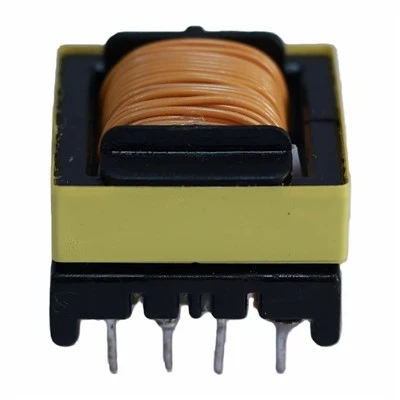
Let’s start with the basics to ground this. A power transformer transfers electrical energy between two or more circuits via electromagnetic induction, with no moving parts (that’s a key point—less maintenance, fewer points of failure). Its efficiency is the ratio of output power to input power, expressed as a percentage. Input power is always higher than output because of two core types of losses: no-load losses (also called core losses) and load losses (winding losses plus stray losses). No-load losses happen even when the transformer isn’t carrying current, from the magnetic hysteresis and eddy currents in the iron core. Load losses only appear when the transformer is energized under load, from resistance in the copper or aluminum windings, plus small stray losses from leakage flux in nearby metal components.
For decades, industry consensus held that the maximum practical efficiency for a large power transformer (think 100 MVA and above, the kind we supply for substations, renewable energy farms, and industrial facilities) hovers around 99.5%. But here’s where context matters: that number only applies when the transformer is operating at its optimal load point, which is typically 50% to 70% of its rated capacity. Why? Because transformer losses aren’t linear. No-load losses stay constant regardless of load, while load losses increase with the square of the load current. At low loads, no-load losses dominate, dragging efficiency down. At full load, load losses spike, causing efficiency to drop too. The sweet spot—where fixed and variable losses are balanced—lands around 60% of rated load for most conventional designs, and that’s where you’ll see that 99.5% peak efficiency.
But can we push higher? A lot has changed in the last 15 years with material science. Back in the 1990s, standard transformer cores used grain-oriented electrical steel, which had core losses of roughly 1.2 watts per kilogram. Today, we use high-grade amorphous metal cores, which cut no-load losses by up to 70%. These cores are made by melting metal alloys and cooling them so fast they form a non-crystalline structure, reducing hysteresis and eddy currents dramatically. We’ve also optimized winding designs: advanced copper conductors with ultra-thin insulation, precision winding tension to minimize stray flux, and even cryogenic cooling for specialty high-capacity transformers, which reduce winding resistance at low temperatures. For example, a 200 MVA amorphous core transformer we supplied to a wind farm in the upper Midwest last year hit a peak efficiency of 99.7%—that’s 0.2 points higher than a conventional design. It cut their annual energy losses by over 120 MWh, which translated to $14,000 in annual energy cost savings on top of lower carbon emissions.
That said, those ultra-high efficiency numbers aren’t universal. They only make sense for transformers that operate at a relatively constant load, like grid primary transformers that run at 55-65% load 99% of the time. If you’re designing a transformer for a industrial facility with variable loads—say, a heavy manufacturing plant that runs at full capacity for 8 hours a day and idles the rest—amorphous core technology might not be worth the extra upfront cost. The payback period for that 99.7% efficiency transformer would be too long, because it’s wasting so much energy when the load is low. For variable load applications, the sweet spot is often a slightly lower peak efficiency (around 99.4-99.5%) but a lower total cost of ownership over the transformer’s 30+ year lifespan.
I’ve seen this dynamic play out hundreds of times. Last year, a plant manager from a Midwest steel mill reached out, asking for the highest efficiency transformer on the market. Their initial budget included an amorphous core unit, but after we did a load profile analysis, we realized their transformer would only hit the optimal load point 25% of the time. We worked with them to adjust the design: a high-grade grain-oriented core, optimized winding layout, and a slightly smaller rated capacity that matched their average load. That unit still had a peak efficiency of 99.5%, but its total annual losses were 15% lower than their old transformer, and the upfront cost was 20% less than the amorphous core option. They saved over $22,000 in the first year alone. That’s the thing about maximum efficiency—it’s not just about chasing the highest number on a spec sheet. It’s about matching the design to the actual way the transformer will be used.
There are also regulatory and industry standards that tie into this. The Department of Energy (DOE) in the U.S. and IEC international standards set minimum efficiency requirements for transformers sold in their regions. For large power transformers (above 5 MVA), the minimum required efficiency is around 99.0%, but leading suppliers like us go above and beyond that because we know our customers care about long-term performance. We also test every transformer before it leaves our facility to verify efficiency, using standard load loss and no-load loss testing per IEC 60076 standards. That testing isn’t just a box to check—it’s how we make sure the performance we promise matches the actual numbers in the field.
A common misconception we run into is that “maximum efficiency” is a static value. It’s not. Ambient temperature plays a role too. Transformers run cooler in cold weather, which reduces winding resistance, cutting load losses by 2-3% compared to operation at 40°C (the standard test temperature). In hot climates, transformer oil or air cooling has to work harder, raising operating temperature and slightly reducing efficiency by 0.1-0.2%. That’s why when we supply transformers to facilities in the desert Southwest, we adjust the design to compensate for higher ambient temperatures, ensuring they still hit the target efficiency even in extreme heat.
Another factor is transformer age. While transformers are built to last 30 to 40 years, efficiency does degrade over time. Winding insulation can wear, core material can degrade from long-term exposure to magnetic flux, and loose connections can add stray losses. Regular maintenance—like oil testing, core integrity checks, and winding resistance measurements—can slow this degradation. We offer long-term support and retrofitting services, too: for older transformers, we can replace the core with high-grade material or rewind windings to boost efficiency by up to 1% without replacing the entire unit. That’s a cost-effective option for customers who don’t want to install a new transformer but want to reduce their operating losses.
So, to circle back: what is the maximum efficiency of a power transformer? The short answer is, it depends. For large, steady-load transformers using modern amorphous core technology, it can reach up to 99.7% at optimal load. For conventional grain-oriented core transformers designed for variable loads, the maximum is around 99.5%. For applications with extremely variable or low load, that number shifts slightly lower, but the tradeoff in upfront cost makes it the right choice. What matters most is that your transformer’s efficiency is aligned with your specific use case, because a single high efficiency number won’t deliver the best value if it doesn’t match your grid or facility’s needs.

If you’re in the market for a power transformer and want to dive deeper into what design will deliver the right efficiency for your operation, our team is here to help. We work with industrial plants, renewable energy developers, utility companies, and commercial facilities to analyze load profiles, propose custom designs, and test every unit to meet your performance requirements. Reach out to our team to discuss your next project—we’ll break down the numbers, answer your questions, and help you find a transformer that balances peak efficiency, cost, and long-term reliability. Whether you need a compact unit for a remote solar farm, a large transformer for a substation, or a retrofit for an older unit, we have the expertise to deliver a solution that works for you.
Common Mode Inductor References:
- IEC 60076-1: Power transformers – Part 1: General requirements
- DOE Energy Efficiency Standards for Power Transformers, 2022
- NEMA TP 1-2019: Efficiency Standard for Distribution Transformers
- "Amorphous Metal Transformers: Technology and Application" – IEEE Transactions on Power Delivery, 2018
- Transformer Loss Evaluation and Optimization – Electric Power Research Institute (EPRI), 2021
Dongguan Hensiron Electric Co., Ltd.
As one of the most professional power transformer suppliers in China, we have world-leading production equipment and strong manufacturing capabilities. Please feel free to buy high quality power transformer made in China here from our factory. Customized orders are welcome.
Address: Building 4, Xinxing Industrial Zone, Wangao Road, Wanjiang Street, Dongguan City, China
E-mail: jessica@dghensiron.com
WebSite: https://www.dghensiron.com/
