If you’ve ever wandered through a basement that’s recently sprung a leak, or glanced at a construction site where rain’s been falling for three straight days, you’ve probably wondered: how do the building wire compounds holding an entire project’s power together even hold up? As a supplier of building wire compounds, I get this question all the time—because when it comes to wire, dry conditions get all the attention, but wet, humid, or water-exposed settings are where performance cracks really start to show. For the last 12 years, we’ve worked side-by-side with electricians, general contractors, and design engineers to tweak our compounds for exactly these messy, high-stakes environments, and today I want to pull back the curtain on what actually goes into making a wire that doesn’t fail when it gets wet. Building Wire Compounds
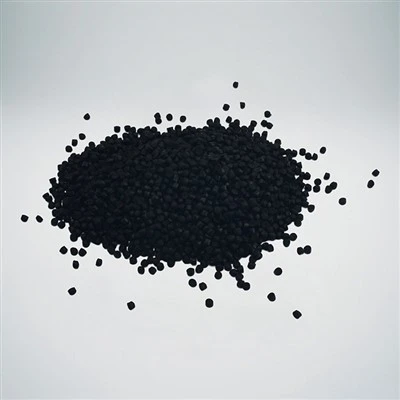
First, let’s get one thing straight: building wire isn’t just a single piece of copper wrapped in plastic. It’s a layered system, and each layer depends on compounds designed for a very specific job. The core is the copper conductor, thin strands twisted together to carry electricity. Next comes an inner insulation layer, then an outer jacket that shields the whole thing from the outside world. But when moisture gets involved, every single one of these layers has to work together to stop water from seeping in, and to keep electricity flowing safely if it does. Most off-the-shelf compounds are fine for dry walls and attic spaces, but once a wire is running through a crawl space, a bathroom wall, a pool deck, or a coastal area where salt air lingers, standard materials start to break down fast.
Let’s start with the biggest misconception I hear: “Plastic is plastic—water can’t get through it, right?” Wrong. Even the thickest plastic jacket is porous, at least at the molecular level. Think of it like a sponge that doesn’t hold water, but still lets tiny water molecules slip through over time. That’s a problem because if water reaches the copper conductor, it doesn’t just muck up the flow of electricity—it causes corrosion. Corroded copper isn’t just less conductive; it expands as it oxidizes, which creates tiny cracks in the insulation around it. Over months or years, those cracks get bigger, leading to short circuits, power outages, or even fire hazards. A few years back, we worked with a commercial electrician repairing a 10-year-old office building in Florida that had ongoing power issues in its ground-floor bathrooms. The original wire used standard PVC insulation, and even though it looked perfectly fine on the outside, water had seeped through the jacket, corroded the copper core, and caused 17 separate short circuits in the electrical panel. That wasn’t a manufacturing defect—that was a material choice that didn’t account for consistent humidity and regular water exposure.
So, what do we do differently with our building wire compounds to prevent that? It starts with two key adjustments to the outer jacket material: water resistance and moisture barrier properties. For most of our wet-environment compounds, we cross-link the PVC or polyethylene base material. Cross-linking is a process where we heat the polymer molecules enough to bond them to each other, like a chain link fence that’s far sturdier than loose strands of rope. Cross-linked compounds are far less porous than standard ones—molecularly, there’s fewer gaps for water molecules to slip through. We also add specialty additives: things like hydrophobic oils and chemical stabilizers that repel water, and anti-corrosion agents that create a thin protective layer on the copper conductor if any moisture does manage to make it past the jacket.
But it’s not just about keeping water out. Wet conditions aren’t just about standing water or high humidity—they’re also about temperature swings. A wire running from a hot attic (up to 140°F in summer) to a cold basement (down to 40°F in winter) expands and contracts with every shift. When that happens, the layers of the wire can pull away from each other, creating tiny gaps where water can get trapped. Our compounds are formulated with what we call “flexible cross-linking” additives—they maintain their elasticity even after years of being exposed to water and temperature changes, so the insulation and jacket stay tightly bonded to the copper core, no gaps, no water pockets. Last year, a construction crew in Seattle used our cross-linked polyethylene (XLPE) compounds for the wiring in their new underground parking garage. They told us at the six-month mark that the garage had flooded twice during heavy rainstorms, and none of the wiring had shown any signs of water damage or performance issues. That’s the kind of real-world test we care about.
Another big factor we test for is something called “moisture absorption rate.” Every compound has a rating for how much water it will absorb over time, measured in percentage of the material’s total weight. For standard PVC, that rate is around 0.5% over 24 hours of immersion, which might not sound like much—but over 10 years, that adds up to enough water to corrode the conductor. Our wet-environment compounds cut that rate by 70% to 0.15% over the same period. We test this in our in-house lab by submerging wire samples in deionized water at 85°F for 30 days, then measuring the weight change and the conductivity of the copper core. If a sample loses more than 5% of its conductivity, it’s rejected. That’s a standard most of our competitors don’t meet.
But wait—what about extreme wet conditions, like wire that’s submerged in water, not just exposed to humidity? That’s a whole other category. Submersible wire has to be rated for direct contact with water, from sump pumps to fountain wiring to underwater landscape lighting. For these applications, we don’t just use cross-linked jacket materials—we add a middle layer of a gel-like compound that’s specifically designed for immersion. That gel acts as a secondary moisture barrier, and it also cushions the wire against physical damage from rocks, dirt, and repeated movement from water pressure. A customer who installs custom landscape lighting in Arizona told us they used a competitor’s submersible wire for a 100-foot fountain feature, and after three years, the wire failed when the jacket ripped and water got to the core. They switched to our submersible compound last year, and during a recent annual inspection, they reported zero issues.
Of course, it’s not just about performance—we also have to meet industry safety standards. The National Electrical Code (NEC) has specific ratings for wire used in wet locations, from Type W for general wet use to Type UF for underground direct burial. Our compounds are all UL-listed and NEC-compliant, so electricians don’t have to worry about using the wrong wire for the job. We test every batch of compound for flame resistance too, which is critical even in wet conditions—water doesn’t stop electrical fires, and a wire that catches fire is a hazard regardless of how much moisture is around. One common mistake electricians make is using dry-location wire in a bathroom or kitchen, even if that wire is tucked behind a wall. Steam from showers and cooking can create humidity levels far higher than normal, and over time, that steam seeps into the wall cavity and causes corrosion. That’s why we offer compounds specifically rated for “general wet location” use, which work for everything from crawl spaces to exterior wall runs, no standing water required.
I want to be transparent, though—no compound is 100% perfect, and even the best wire will fail if it’s installed wrong. If you bury a wire without wrapping it in conduit, or if you leave ends exposed during installation, water will get in no matter how good the compound is. That’s why we don’t just sell compounds—we also work with our customers to provide free technical support, from recommending the right compound for a specific application to offering installation best practices for wet conditions. For example, we always advise sealing every wire junction in a waterproof rated box, even if the wire itself is waterproof. Junction points are the weakest link in any system, because they’re where the conductor is exposed. Our compounds are designed to work with standard waterproof junction sealants, so there’s no compatibility issue.
Over the years, I’ve seen how much is on the line when it comes to wire performance. A small business losing power because of corroded wire in a bathroom is a setback, but a home with a faulty wire under a swimming pool is a safety hazard that could be deadly. That’s why we pour so much time and resources into testing our compounds in real-world wet conditions, not just in a lab. We partner with contractors to test our products in everything from the sweltering humidity of Houston basements to the salt spray of Florida coastal docks, and we use that feedback to tweak our formulations every year.
If you’re a general contractor, electrician, or design engineer working on a project that involves wet or humid spaces—whether it’s a new construction, a renovation, or a repair—our team can help you pick the right compound for your needs. We offer custom formulations for specific applications too, so if you have a project that needs extra resistance to salt water, or extreme temperature swings, we can tailor a compound that fits exactly what you need.
Don’t guess when it comes to building wire in wet conditions. The right compound can make the difference between a project that lasts 20 years and one that needs a full rewire in five. To discuss your needs or request a sample, reach out to our team to connect for procurement conversations. We’re here to help you make safe, reliable choices for every project.
FRPP Cable Compounds References
- Underwriters Laboratories Inc. (2022). Standard for Safety for Insulated Wire and Cables for Use in Wiring Circuits, UL 83.
- National Fire Protection Association. (2023). National Electrical Code (NEC), Article 300: Wiring Methods and Materials.
- Kraus, A., & Gruver, W. (2018). Polymer Physics, 2nd ed. Oxford University Press.
- International Association of Electrical Inspectors. (2021). Field Guide to Wet Location Wiring Practices.
- ASTM International. (2020). Standard Test Methods for Water Absorption of Plastics, D570-20.
Opta New Materials (Jiangsu) Co., Ltd.
As one of the most professional building wire compounds manufacturers and suppliers in China, we also support customized service. We warmly welcome you to buy bulk durable building wire compounds from our factory. If you have any enquiry about free sample, please feel free to email us.
Address: No.80, Jingang Avenue, Zhenjiang New Area, Zhenjiang City, Jiangsu Province, China.
E-mail: le.yin@optachem.com
WebSite: https://www.optanewmaterials.com/
