If you’ve ever spent time around pool construction or renovation projects, you’ve probably heard the term “fiberglass mesh” thrown around, but you might not have realized just how critical its weight is to the longevity, strength, and overall performance of a pool shell. As a fiberglass mesh supplier who’s worked directly with pool builders, remodelers, and DIY enthusiasts for over a decade, I can’t tell you how many times I’ve gotten a late-night call from a contractor panicking because they used the wrong mesh weight on a project—and now they’re dealing with cracks, delamination, or even structural issues that could have been avoided with a little basic knowledge. That’s why today, I want to break down exactly what weight fiberglass mesh works best for pool shells, why it matters, and how to make the right choice for your project. Fiberglass Mesh
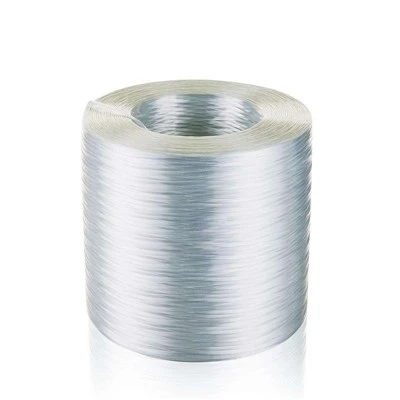
First, let’s get clear on what we’re talking about when we reference “fiberglass mesh weight” in pool construction. For our industry, mesh weight is measured in ounces per square yard (oz/yd²)—the standard unit most suppliers and builders use to compare products. You’ll see options ranging from 1 oz/yd² all the way up to 4 oz/yd², and each serves a very specific purpose. A lot of first-time builders assume heavier mesh is always better, but that’s not the case at all. Using a mesh that’s too light can leave your pool shell weak and prone to damage, while a mesh that’s too heavy can add unnecessary cost, make installation harder, and even create structural issues if it adds too much weight to the pool’s walls.
So, what’s the right weight for a standard in-ground pool shell? From my experience working with thousands of pool projects over the years, the sweet spot is almost always 1.5 oz/yd² to 2.0 oz/yd². Let me explain why. Pool shells—whether they’re constructed with concrete, gunite, or even newer hybrid materials—rely on the fiberglass mesh as a “reinforcement backbone.” The mesh is embedded in the wet plaster or resin layer, and it distributes stress evenly across the pool’s walls and floor. If you use a 1 oz/yd² mesh, it’s too thin to handle the constant pressure of water, temperature fluctuations, and minor ground shifts. I’ve seen too many 1 oz mesh applications develop hairline cracks within the first year, especially around corners or step areas where stress concentrates. On the flip side, a 3 oz or 4 oz mesh is overkill for most standard pools. It’s stiffer, harder to cut and shape around curves and edges, and adds extra weight that can strain the underlying structure, particularly for smaller pools or installations on unstable soil.
Now, let’s dive into the science behind why weight matters, because this isn’t just a arbitrary number—there are engineering principles at play here. Fiberglass mesh for pool shells is made from interwoven alkali-resistant (AR) glass fibers, which are designed to withstand the high pH levels of pool chemicals and the moisture that’s constant in a pool environment. The weight of the mesh directly correlates to two key properties: tensile strength and coverage density. Tensile strength is the amount of force the mesh can withstand before breaking. A 1.5 oz mesh typically has a tensile strength of around 200 pounds per inch (lbs/in), which is exactly what’s needed to resist the hydrostatic pressure of water and the expansion/contraction of the pool material as temperatures change. A 2 oz mesh bumps that up to about 280 lbs/in, which is perfect for larger pools, deep-end walls, or projects in areas with frequent freeze-thaw cycles—places where the ground shifts more often, putting extra stress on the shell.
Coverage density, meanwhile, refers to how closely the fibers are woven together. A lighter mesh has larger gaps between the fibers, which means it doesn’t bond as well with the plaster or resin. This leads to what’s called “delamination,” where the mesh pulls away from the pool shell over time. I had a client in Florida a few years back who used a 1 oz mesh for his 12×24 foot pool—within 18 months, the entire plaster layer was peeling off, and the mesh was lying loose on the ground. He’d saved a few dollars on the mesh upfront, but the repair cost him three times that amount. That’s the risk of choosing a mesh that’s too light.
But wait—there are exceptions to every rule, right? Let’s talk about when you might need a heavier or lighter mesh, even if they’re less common. For above-ground pool shells, for example, most manufacturers recommend a 1.25 oz/yd² mesh because above-ground pools have a thinner wall structure and lower overall weight requirements than in-ground models. I recently worked with a small above-ground pool builder who was using 2 oz mesh on all his projects, and he was struggling with the walls bowing outward during high water pressure. Switching to 1.25 oz fixed that issue—proof that mesh weight has to match the pool’s design.
On the other end, if you’re building a commercial pool, a large recreational pool, or a pool in a region with extreme climate conditions (like Alaska, where freeze-thaw cycles can happen dozens of times a year), a 2.5 oz/yd² mesh might be necessary. Commercial pools have higher foot traffic, more chemical exposure, and larger volume, so they need extra reinforcement to withstand constant use. I supplied a commercial water park in Texas a couple years back, and they required 2.5 oz mesh for all their main slide pool shells—even though the extra mesh added a bit of cost, the park hasn’t had a single structural issue in three years, which speaks to the value of matching mesh weight to the application.
One of the most common mistakes I see builders make is not considering how the mesh interacts with other materials in the pool shell. If you’re using a vinyl liner over a concrete shell, for example, you might need a slightly lighter mesh (1.5 oz) because vinyl liners don’t require the same level of reinforcement as a plastered or fiberglass shell. But if you’re building a traditional gunite pool, the 1.5-2 oz range is non-negotiable. Another factor is the thickness of the pool’s surface layer: a thinner plaster coat (1/8 inch or less) works best with a 1.5 oz mesh, while a thicker coat (up to 3/8 inch) can handle a 2 oz mesh without issues.
I also get asked a lot about how to install the mesh correctly to get the most out of its weight. It doesn’t matter if you have a top-of-the-line 2 oz mesh if you install it wrong. The key is to embed the mesh fully into the wet surface, making sure there are no wrinkles, gaps, or overlaps that are too small. I always tell contractors to overlap mesh panels by at least 4 inches—smaller overlaps can create weak points where stress concentrates. Also, never stretch the mesh too tight; it should lie flat against the formwork so it distributes stress evenly, not pulls on the edges. I once had a contractor who stretched a 2 oz mesh so tight on a pool wall that it caused the wall to crack when the plaster set. That’s a good reminder that mesh weight matters, but installation is just as important.
Now, let’s talk about cost, because I know that’s a big factor for most projects. Heavier mesh is more expensive upfront, right? A 1.5 oz mesh might cost around $0.50 per square foot, while a 2 oz mesh is about $0.75 per square foot, and a 2.5 oz is $1.00 per square foot. But as I mentioned earlier, choosing a lighter mesh to save money can end up costing you far more in repairs. That 1 oz mesh I talked about earlier? It might only cost $0.30 per square foot, but if you have to repair a crack that runs across the entire pool wall, you’re looking at $5,000 to $10,000 in repairs, plus downtime for your customer. From my perspective, the right mesh weight is an investment in the longevity of your pool, not an extra cost.
I also want to address a common misconception: all 2 oz fiberglass mesh is the same. As a supplier, I can tell you that not all mesh is created equal. Some manufacturers use lower-grade AR glass fibers, which degrade faster in pool chemicals, even if they have the same weight. That’s why it’s important to work with a supplier who tests their mesh for alkali resistance—look for mesh that meets ASTM C1035 standards, which is the industry standard for pool reinforcement mesh. A 2 oz mesh that meets ASTM standards will outperform a 3 oz mesh that doesn’t, because its fibers are stronger and more durable in the long run.
So, putting it all together, here’s a quick guide to choosing the right fiberglass mesh weight for your pool shell:
- Standard in-ground residential pool (10×20 to 20×40 feet, average depth 4-6 feet): 1.5-2.0 oz/yd²
- Above-ground pool: 1.25 oz/yd²
- Commercial pool or extreme climate installation: 2.0-2.5 oz/yd²
- Thin surface layer (1/8 inch or less) or small pool corners/steps: 1.5 oz/yd²
- Thick surface layer (1/4 inch or more) or large deep-end walls: 2.0 oz/yd²

If you’re still not sure which weight is right for your project, don’t guess—that’s a risk I see too many people take. As a fiberglass mesh supplier, I’ve worked with builders, remodelers, and DIYers of all skill levels, and I’m happy to help you walk through your project details to pick the perfect mesh. Whether you’re a small contractor needing a bulk order for three pools or a homeowner renovating your backyard, I can provide samples, technical specs, and guidance to make sure you get the right product for your needs. Don’t waste money on the wrong mesh, or end up dealing with costly repairs down the line—reach out to us to discuss your requirements and get a tailored recommendation for your pool shell.
Fiberglass Mesh References:
ASTM C1035 – Standard Specification for Alkali-Resistant Glass Fibers for Reinforcement of Concrete and Mortar
National Pool and Spa Association (NPVA) – Pool Construction Guide: Reinforcement Materials for Swimming Pool Shells
Journal of Materials in Civil Engineering – “Performance of Fiberglass Mesh Reinforcement in Concrete Pool Structures” (2019)
Danyang Yonggu Building Materials Co., Ltd.
As one of the most professional fiberglass mesh manufacturers and suppliers in China, we have world-leading production equipment and strong manufacturing capabilities. Please feel free to wholesale customized fiberglass mesh made in China here from our factory. For price consultation, contact us.
Address: Danyang City, Jiangsu Province, P.R. China
E-mail: sales02@cnyongu.com
WebSite: https://www.ygfiberglasses.com/
