Hey there, let’s talk about something that comes up every single time a manufacturer reaches out to me about CNC turning centers: repeatability. And yeah, I get it—most folks don’t really grasp what it actually means, beyond “it makes parts the same way every time.” As a CNC turning center supplier who’s worked with shops big and small for 12 years, I’ve heard so many wrong takes on this, and it’s led to bad buys, missed deadlines, and wasted cash. So let’s break this down straight, no jargon overload. CNC Turning Centers
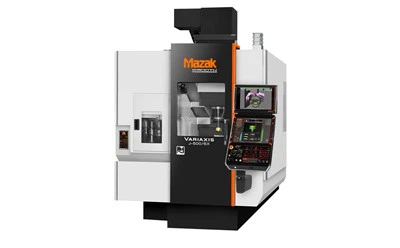
First off, let’s cut the fluff. CNC turning center repeatability is basically how consistently the machine hits the same exact position when you ask it to. Like, if you tell it to cut a 10mm diameter shaft, how often does it land at 10mm (plus or minus a tiny number) instead of jumping to 10.002 one time, 10.005 the next, and 9.998 the third? That inconsistency? That’s lack of repeatability, and it’s the silent killer for shops—especially if you’re running mass production or tight-tolerance parts, like medical implants or aerospace fasteners.
Wait, and let’s make sure we don’t mix it up with accuracy, because that’s another big mistake people make. Accuracy is how close you get to the true desired measurement. Repeatability is about the consistency of that measurement. So a machine could be super accurate (hits 10mm on average) but have terrible repeatability—one part is 9.99, another 10.01, and another 9.995. That’s useless for high-volume runs, right? You can’t inspect every part, so you need the machine to not veer around.
Now, let’s get into what actually affects repeatability of a CNC turning center, because it’s not just the brand name slapped on the machine. First, there’s the hardware. The linear guides on the axes (X, Z, maybe Y if it’s a multitasking model) are huge. Worn-out ball screws, for example—if the balls in there are pitted or have play from years of running, the machine can’t stop at the same spot twice. We had a customer last year who bought a cheap imported turning center, and in three months, the repeatability was off by 0.015mm. Why? The ball screws were made with soft steel that wore way too fast under constant load.
Then there’s backlash. That’s the tiny gap between the mating parts when the direction changes. Like, if you’re moving the X axis left, then tell it to move right, how much does it “slip” before it actually starts moving? Good machines have backlash compensation built in, but cheap ones cut corners there, so that gap eats into repeatability. We had a job shop that was running 10,000 aluminum brackets a week on a no-name machine—their reject rate went from 1% to 8% once the backlash started spiking. That cost them more than the machine was worth in two months.
Another factor: servo motors and the control system. Cheaper machines use open-loop servos, which don’t actually confirm if the axis hit the position you commanded. Closed-loop servos, on the other hand, have encoders that send feedback to the control, so if the motor slips, it corrects itself right away. That’s non-negotiable for good repeatability. The control software matters too—modern ones have things like thermal compensation, which is key because when a machine runs all day, it heats up, and parts expand. A machine without thermal compensation might hit 0.008mm off after an hour of running, just from heat. Our standard models all have that built in, because we learned early on that ignoring heat drift means headaches for customers.
Now, how do you actually measure repeatability? It’s not just guessing—you test it. The standard way is to set the machine to move a specific distance, say 50mm, and then have it return to that same spot 10 times in a row. You track each position with a dial indicator or a laser interferometer, which is the precision tool for this. The difference between the highest and lowest measurement is your repeatability value. For most general-purpose CNC turning centers, that’s usually around 0.002mm to 0.005mm. If you’re running tight-tolerance work (like medical parts that need 0.001mm tolerance), you want that number lower—0.001mm or less.
Wait, but here’s something most suppliers won’t tell you: repeatability isn’t a static number. It degrades over time if you don’t maintain the machine. We get calls all the time from customers who say “my machine was great new, now it’s inconsistent.” Usually it’s lack of regular maintenance—no lubrication of the guides, ignoring way oil changes, or running parts with heavy chips that hit the axis ways and cause wear. I always tell our customers: a $50 annual maintenance check from a tech is way cheaper than scrapping a batch of parts because your machine’s repeatability dropped.
Let’s talk about why this actually matters for your shop, not just some engineering term. Let’s do a quick math example: if your CNC turning center has a repeatability of 0.01mm, that means 1 out of 10 parts might be off by 0.01mm. If you’re making 1,000 parts a day, that’s 100 bad parts. Each bad part costs you material, labor, and time to rework or scrap—maybe $20 a part, that’s $2,000 a day down the drain. On the flip side, a machine with 0.003mm repeatability? That’s 3 bad parts out of 1,000, so you save almost $1,950 a day. Multiply that over a year, and that’s enough to cover a new tooling set, or a raise for your team.
Also, for custom parts, repeatability means less setup time. If your machine is consistent, you don’t have to tweak the tool offsets every time you change a job. We had a customer who used to spend 2 hours setting up a new run because their old machine would drift. With our turning centers, they set up in 20 minutes. That’s 10 extra hours a week they can use to run more parts and make more money.
Now, let’s address the elephant in the room: are expensive machines always more repeatable? No, not necessarily. Some mid-range machines we sell have repeatability that’s just as good as entry-level luxury models, because we prioritize quality components in the axes and servos. But cheap machines? Almost never. We had a customer buy a $20k import machine a few years back, and when we tested its repeatability, it was 0.02mm—way too high for their aerospace work. They ended up trading it in for one of our $35k models, and their reject rate dropped by 7%. The higher price was a no-brainer for them, because the savings from less scrap paid for it in 3 months.
Another thing: multitasking CNC turning centers (the ones that do turning and milling on the same machine) have extra axes, so repeatability there is even more critical. If the Y axis is off, you’ll get inconsistent milled features on the turned part, which is a double whammy. We design our multitasking models to have matched repeatability across all axes, so you don’t have to worry about one axis being worse than another.
Wait, let’s clear up a common myth: repeatability doesn’t just apply to axis movement. It also applies to tool change, right? When the machine grabs a new tool, how consistently does it mount that tool in the spindle or turret? A bad tool change repeatability means your cut depth changes, which ruins part dimensions. That’s why our machines use hydraulic tool clamping instead of mechanical—more consistent clamping force, so every tool is mounted the same way.
So what should you look for when shopping for a CNC turning center, if repeatability is your main concern? First, ask the supplier for the repeatability specification for each axis, not just a vague “high precision” claim. Reputable suppliers will have test reports from when the machine was assembled, showing the measured repeatability. Second, ask what components are used: closed-loop servos, linear guides vs. slideways, ball screws with preload (that reduces play). Third, ask about support—if something goes wrong, can they send a tech to calibrate the machine and check repeatability? We offer free repeatability testing for any customer who buys our machine, and annual calibration checks for a small fee.
Now, let’s wrap this up with what you need to remember: repeatability is consistency, not accuracy. It’s not a number set in stone—it changes with maintenance and use. And it’s one of the biggest factors that determines how much your shop makes, not just how much your machine costs.
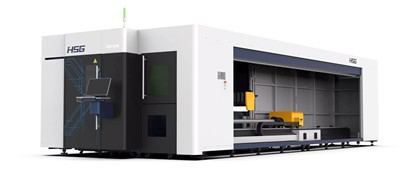
If you’re tired of dealing with inconsistent parts, high reject rates, or machines that break down when you need them most, let’s chat. We can walk you through our CNC turning center models, show you their repeatability test data, and even talk through what your shop’s specific needs are (whether that’s mass production, tight-tolerance medical parts, or heavy-duty aerospace work). There’s no one-size-fits-all, but we can find the right machine that’ll save you time and money.
Measuring Machine References
- "CNC Machine Tool Repeatability and Accuracy: A Practical Guide," Manufacturing Engineering and Technology, 7th Edition, Kalpakjian, S. and Schmid, S.R.
- "Linear Motion Systems for CNC Turning Centers," Modern Machine Shop, Vol. 88, No. 12, 2016
- "Calibration of CNC Machine Tools for Positioning Accuracy and Repeatability," National Institute of Standards and Technology (NIST) Technical Note 1825, 2014
- "The Impact of Repeatability on Manufacturing Cost for Volume Production," Journal of Manufacturing Systems, Vol. 45, 2017
Hermens Industrial Co., Ltd.
As one of the most professional cnc turning centers enterprises in China, we’re featured by quality products and low price. Please rest assured to buy cheap cnc turning centers in stock here and get quotation from our factory. We also accept customized orders.
Address: 9/59 Moo 14, Rachathewa , Bang Phli , Samut Prakan Province 10540
E-mail: liu_jincheng@hzhemen.com
WebSite: https://www.hermensindustrial.com/
